At 65, OHIP (the Ontario Health Insurance Plan) pays for one major eye exam every 18 months, and Ontario's government-funded clinics give you physiotherapy with no fee and no doctor's referral. OHIP does not pay for glasses, contact lenses or a visit to the dentist's office.
Other help starts at 65 too, but it comes through separate programs. The Ontario Drug Benefit covers most prescriptions after a small deductible. The Assistive Devices Program pays part of the cost of hearing aids. And a free dental program helps seniors with lower incomes.
Knowing which is which saves money. A follow-up eye visit you thought you would pay for may be covered. A hearing aid you thought was free is not.
One timely note: as of October 26, 2026, free flu and COVID-19 shots are open to everyone in Ontario aged 6 months and up, at participating pharmacies, public health units, and doctor and nurse practitioner offices. Call ahead to check supply. Our post on the senior flu shot this fall covers what to ask for.
Below: the full covered, partly covered and not covered list, then each item in plain words. This is general information, and the rules change. Your clinic, pharmacist or ServiceOntario can confirm your own case.
What does OHIP cover for seniors over 65?
OHIP covers doctor visits, hospital care, routine eye exams and some podiatry. At 65, Ontario also pays for physiotherapy at government-funded clinics, most prescriptions through the Ontario Drug Benefit, and home care if you qualify. Glasses, dental office visits and most care outside Canada are not covered, or only partly.
| Service | Does Ontario pay? | The rule at 65 or over |
|---|---|---|
| Routine eye exam | Yes | 1 major exam every 18 months, plus 2 follow-up visits. Every 12 months with an eligible eye condition. |
| Glasses and contact lenses | No | You pay, or your private insurance does. |
| Physiotherapy at a government-funded clinic | Yes | No fee, and no referral needed. |
| Physiotherapy, chiropractor at a private clinic | No, or partly | You may pay part or all of the cost. |
| Prescriptions at a pharmacy | Partly | Ontario Drug Benefit: $100 deductible a year, then up to $6.11 per prescription. Less with lower income. |
| Home care (nursing, personal support, therapy) | Yes, if you qualify | Ontario Health atHome assesses your needs first. |
| Hearing test | Sometimes | Ask the clinic before you book. |
| Hearing aids | Partly | The Assistive Devices Program pays 75%, up to $500 per ear. |
| Dentist's office visits | No | A separate free program helps seniors with lower incomes. |
| Dental surgery that must be done in hospital | Yes, some | For example, repairing a fracture or removing a tumour. |
| Ambulance trip to hospital | Partly | $45 if medically essential. $240 if a doctor decides it was not. |
| Hospital stay | Yes | A private or semi-private room you ask for costs extra. |
| Podiatrist | Partly | $7 to $16 of each visit, up to $135 a year, plus $30 for x-rays. |
| Emergency care outside Canada | Partly | Up to $50 a day as an outpatient, $200 to $400 a day in hospital. |
| Cosmetic surgery | No | Not covered at any age. |
Sources: Government of Ontario pages on what OHIP covers, government-funded physiotherapy, prescription drug coverage, home care, hearing devices, dental care for seniors, the seniors' guide to health programs and OHIP coverage outside Canada. Checked October 26, 2026.
After 65, OHIP pays for one eye exam every 18 months, but not for the glasses.
Are eye exams free for seniors in Ontario?
Yes. OHIP covers routine eye exams for people 65 and up. You get one major eye exam from an optometrist every 18 months, plus 2 follow-up minor assessments. If you have an eligible eye condition, such as diabetes, it is one major exam every 12 months. Glasses and contact lenses are never covered.
If you are used to a yearly eye exam, note the 18 months. Without an eligible condition, a second major exam inside that window is not an OHIP-covered exam.
The eligible conditions, from Ontario's page on what OHIP covers, include:
- diabetes
- glaucoma requiring or having had treatment with medication, laser or surgery
- cataracts with vision of 20/40 or worse in the best corrected eye, or when a surgery referral is made
- retinal disease that is sudden or getting worse over time
- screening for eye damage if you take hydroxychloroquine, chloroquine, ethambutol or tamoxifen
The list on the government page also names some corneal, nerve and inflammation conditions. Your optometrist knows which apply to you.
Cataract surgery itself is an OHIP-insured service. But if you choose upgraded lenses meant to reduce your need for glasses, Ontario says those are not covered, even when they are done during OHIP-covered cataract surgery.
Is physiotherapy covered by OHIP for seniors?
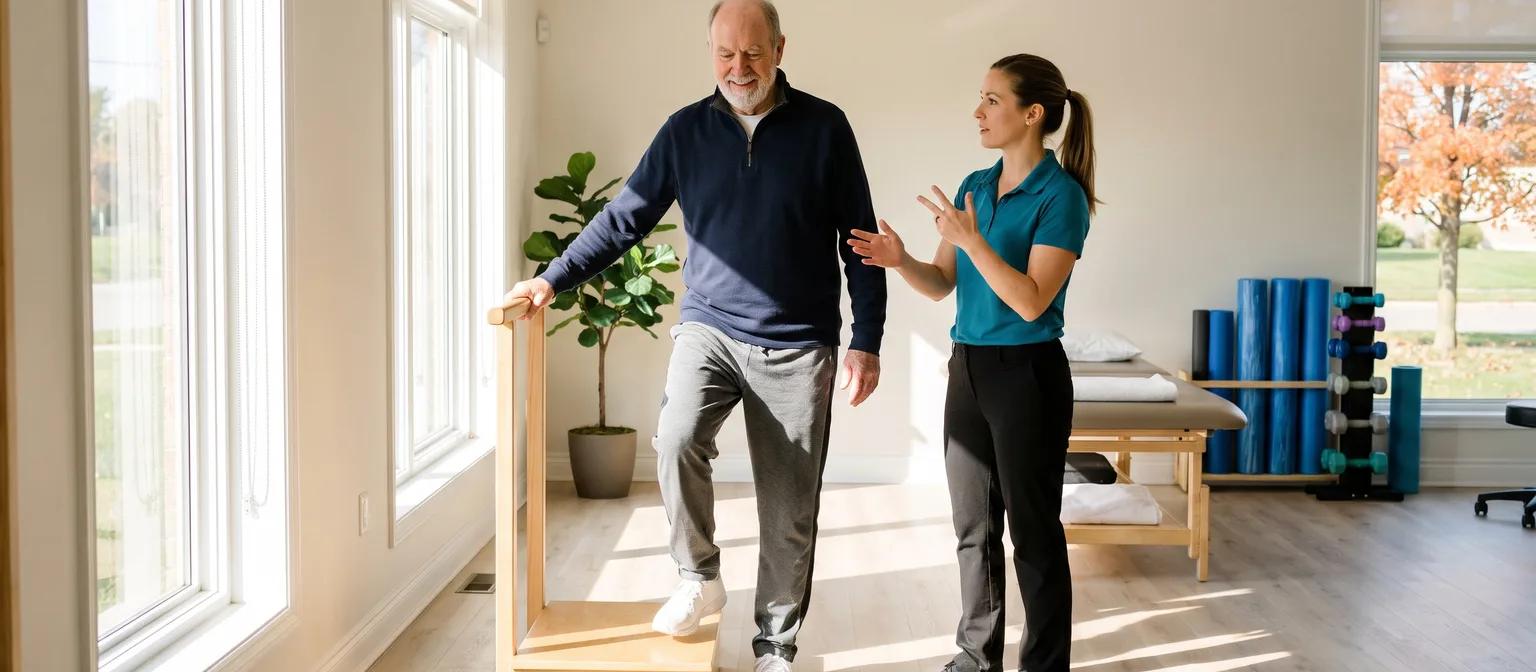
Yes, at a government-funded clinic. If you are 65 or over and have a valid Ontario health card, you can get physiotherapy at one of these clinics with no fee. Since April 1, 2024, you do not need a referral from a doctor or nurse practitioner. You can call the clinic and book yourself.
In Ontario, anyone 65 or over with a valid health card can get physiotherapy at a government-funded clinic, with no fee and no doctor's referral.
Not every physio clinic is part of the program. Ontario publishes a list of government-funded clinic locations, so check that list or ask the clinic before your first visit.
A few more rules from the government page and its October 2025 bulletin:
- Age is enough. At 65 or over, you do not also need a recent hospital stay. (People of any age qualify for a year after an overnight hospital stay or day surgery.)
- More than one problem. You can be treated for more than one condition, at the same time or one after another.
- No set number of visits. The government page does not list a fixed number of sessions. Ask the clinic how many it expects you will need.
- Physio at home. If you need physiotherapy at home, Ontario Health atHome arranges it.
At a private clinic, it is different. Ontario's seniors' guide says you may need to pay the full or partial cost of physiotherapists and chiropractors outside the funded program.
Does OHIP cover medication after 65?
OHIP itself does not pay for prescriptions you fill at a pharmacy. At 65, a separate program does. You join the Ontario Drug Benefit automatically on the first day of the month after you turn 65. Most seniors then pay the first $100 each year, then up to $6.11 per prescription.
You do not apply for the basic coverage. Ontario sends a letter about 3 months before your 65th birthday. The program year runs from August 1 to July 31, so the $100 deductible resets every August. In your first year it may be lower. Ontario's example: if you turn 65 on April 15, coverage starts May 1, and your first deductible is $25.
Two limits to know. You must be an Ontario resident, and the prescription must be filled at an Ontario pharmacy.
If your income is lower, apply for the Seniors Co-Payment Program. It removes the $100 deductible and cuts the co-payment to $2 or less per prescription. This part is not automatic. For the program year from August 1, 2026 to July 31, 2027, the income lines are:
- Single: net income of $25,480 or less
- Couple: combined net income of $42,290 or less
You can apply up to 3 months before you turn 65. Ontario says to apply by September 30 to be paid back for eligible drugs from the year before.
Medication you receive as a hospital in-patient is covered by OHIP. Once you go home, your prescriptions go through the Ontario Drug Benefit like any others.
Does OHIP cover home care for seniors?
Yes, if you qualify. Ontario pays for home care such as nursing, personal support and therapy, arranged through Ontario Health atHome. A care coordinator first assesses what you need. Some community support services can have a co-payment.
The services Ontario lists include:
- nursing, such as help with medications, bandages and recovering from an injury
- physiotherapy and occupational therapy
- personal support with bathing, dressing, eating and using the toilet
- speech-language therapy, social work and nutrition support
- homemaking such as cleaning and laundry, in some cases, for people who also get personal support
To ask for an assessment, call Ontario Health atHome at 1-833-515-1234. Our guide to who qualifies for free home care in Ontario walks through the assessment step by step.
Does OHIP cover hearing tests and hearing aids for seniors?
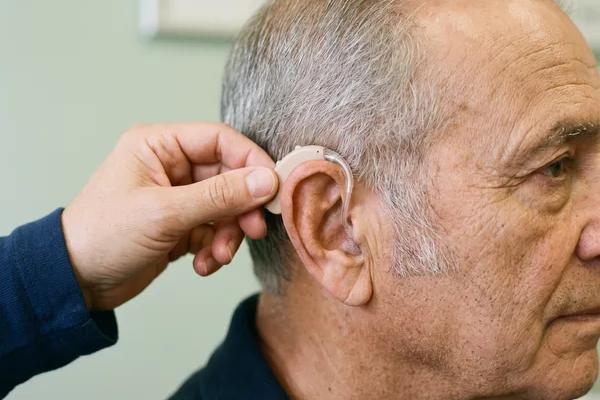
OHIP does not pay for hearing aids. Ontario's Assistive Devices Program pays 75% of the cost, up to $500 per ear, whatever your income. Hearing tests are sometimes covered by OHIP and sometimes not, so ask the clinic before you book.
That "sometimes" comes from the province's own hearing aid information sheet, which says a hearing test is "sometimes" covered by OHIP "and other times you will have to pay." The clinic can tell you which applies before your appointment.
For hearing aids, the program covers people with a hearing loss that needs a hearing aid for 6 months or longer. You are assessed by an audiologist or other hearing professional registered with the program, and you need a prescription from an audiologist or doctor. For both ears, the program's share tops out at $1,000.
Our post on Ontario's Assistive Devices Program explains how to apply.
Does OHIP cover dental for seniors?
OHIP does not cover dental care in a dentist's office. It covers some dental surgery that has to be done in hospital. For routine care, Ontario's Seniors Dental Care Program is free for seniors 65 and over with a net income of $25,480 or less (single) or $42,290 or less (couple, combined).
The Ontario program covers:
- check-ups, including scaling, fluoride and polishing
- fillings and repairs to broken teeth, and x-rays
- removing teeth, and treating infection, pain and gum disease
- dentures, which are partly covered
You cannot have other dental benefits, such as private insurance, with one exception: having the federal Canadian Dental Care Plan does not stop you from qualifying. Spouses apply separately. Our guide to the Canadian Dental Care Plan for seniors covers the federal side.
In hospital, OHIP covers dental surgery such as repairing a fracture, removing a tumour, reconstructive surgery, and medically necessary tooth removal with OHIP's approval first.
Do seniors pay for an ambulance in Ontario?
Usually, yes: $45. If a doctor decides your ambulance trip to hospital was medically essential, you are billed a $45 co-payment. If the doctor decides it was not, the charge is $240. Turning 65 does not remove the fee.
You pay nothing if you:
- receive social assistance
- live in a long-term care home licensed or approved by the province
- receive certain home care services, or meet other exemption criteria
The $240 charge also applies if you do not have a valid Ontario health card. Keep your card current, and keep it with you.
What does OHIP not cover?
For seniors, the most common gaps are glasses and contact lenses, dental office visits, prescriptions at a pharmacy (which the Ontario Drug Benefit handles instead), a private hospital room you ask for, and cosmetic surgery. Most of the cost of care outside Canada is not covered either.
A hospital stay itself is covered, including meals. But if you want a private or semi-private room, Ontario says you or your private insurance pay some or all of the extra fee.
Care outside Canada is the gap that costs the most. OHIP pays only for sudden emergencies, at capped daily amounts, and it does not pay to bring you home to an Ontario hospital. Ontario recommends buying private travel health insurance before you leave. The details are in the questions below.
Personal safety and monitoring devices, such as medical alerts, do not appear on OHIP's list of covered services either. If your family is weighing one, our comparison of senior monitoring devices in Canada shows what each type actually tells you.
Frequently asked questions
Does OHIP cover glasses for seniors?
No. OHIP does not pay for eyeglasses or contact lenses at any age, including after 65. It pays for the eye exam: one major exam every 18 months, or every 12 months with an eligible eye condition such as diabetes.
Does OHIP cover out-of-country medical expenses?
Only for sudden emergencies, and only in part. The illness or injury must be unexpected, start outside Canada and need immediate treatment. OHIP then pays up to $50 a day for outpatient hospital care, or $200 to $400 a day in hospital, depending on the level of care. Ontario recommends private travel insurance.
Does OHIP cover cataract surgery?
Yes. Cataract surgery is an OHIP-insured service. What OHIP does not cover are upgraded lenses or added testing chosen to reduce your need for glasses, even when they are done during the same OHIP-covered cataract surgery. Ask your surgeon to separate what OHIP pays for from any extra you are offered.
Does OHIP cover a podiatrist or a chiropractor for seniors?
Partly for a podiatrist: OHIP pays $7 to $16 of each visit to a registered podiatrist, up to $135 a year, plus $30 for x-rays. You pay the rest. For chiropractors, Ontario's seniors' guide says you may need to pay the full or partial cost, so ask about fees first.
What to do this month
Three small steps cover most of what turning 65 in Ontario changes:
- Check your last eye exam date. If 18 months have passed, book the next one.
- Look at last year's net income. If it is under $25,480 single or $42,290 for a couple, apply to the Seniors Co-Payment Program. If you also have no other dental coverage besides the federal plan, apply to the Seniors Dental Care Program.
- If a knee, hip or shoulder is holding you back, call a government-funded physiotherapy clinic. No referral, no fee.