Canadian Snowbirds: The Critical Safety Net You Can't Pack in a Suitcase
A winter in Florida or Arizona sounds idyllic, but it comes with a dangerous blind spot. Once you cross the border, your established Canadian support network vanishes. Your neighbours don't know you, your family doctor is thousands of kilometres away, and the familiar route to your local hospital doesn't exist.
Relocating for the winter requires more than just travel insurance; it requires a proactive strategy for emergency response. If you suffer a fall or a cardiac event in a rental condo or an RV park, you cannot rely on informal support systems. You need a dedicated lifeline that works seamlessly across borders.
Without a mobile medical alert system capable of US roaming, you are effectively travelling without a safety net.
Key Takeaways
- Geographic vulnerability: Your Canadian support network (family, neighbours) cannot help you during an emergency in the US.
- Roaming is critical: Standard Canadian devices may fail in the US without specific AT&T or T-Mobile roaming agreements.
- GPS is non-negotiable: Dispatchers need your exact coordinates, not just a billing address, especially in large RV parks or golf courses.
- Financial protection: Provincial health coverage (OHIP, MSP) does not cover US ambulance costs; immediate response minimizes expensive hospital stays.
- Holo Alert works everywhere: Our systems automatically switch to the strongest local US carrier, ensuring you remain protected the moment you cross the border.
The Hidden Risks of the Snowbird Lifestyle
The shift from a permanent Canadian residence to a seasonal vacation home brings specific risks that are often ignored until it is too late. In your home community, a neighbour might have a key, and your children might live nearby. When you migrate south, that network is broken.
You may be staying in a gated community where security codes are required for entry, or in a sprawling RV park where "Lot 42" is difficult for an ambulance to find. Furthermore, you are navigating unfamiliar hazards: slippery pool decks, different stair layouts in rental properties, and heat-related fatigue.
If a fall occurs, the ability to summon help instantly is the difference between a minor incident and a life-altering tragedy. This is where Holo Alert steps in. Unlike generic systems that tether you to a landline, the Holo Alert device travels with you. Whether you are on a golf course in Sarasota or a grocery store in Phoenix, our monitoring centre is one button press away.
Looking for cross-border peace of mind? Shop the Holo Alert Pro.
The Roaming Reality: Will Your Button Work in Florida?
Do not assume your current device will work in the United States. While many modern systems are designed for cross-border use, the underlying technology relies on specific cellular partnerships. In Canada, devices connect to Rogers, Bell, or Telus. For a device to work in the US, the provider must have a rock-solid roaming agreement with carriers like AT&T or T-Mobile.
Warning: Older units relying on 3G networks will fail, as US carriers have largely sunsetted their 3G infrastructure. If you travel with outdated equipment, you are carrying a paperweight, not a life-saving device.
The Holo Alert Advantage
We eliminate the guesswork. Holo Alert devices are equipped with multi-network SIM cards that automatically latch onto the strongest available signal, whether that is a Canadian tower or a US partner network. You do not need to sign short-term US contracts or manage a separate bill in US dollars. You simply wear your device, and we handle the connectivity.
Vital Features for Travellers
A standard in-home unit is insufficient for the active snowbird. You are moving between the beach, social gatherings, and your residence. You need features that adapt to a mobile lifestyle.
GPS and Location Tracking
In a static home, the monitoring centre knows where you are because your address is on file. When you are travelling, you are a moving target. If you suffer a medical event while walking to the clubhouse, you may be unable to verbally describe your location. Advanced GPS technology is vital.
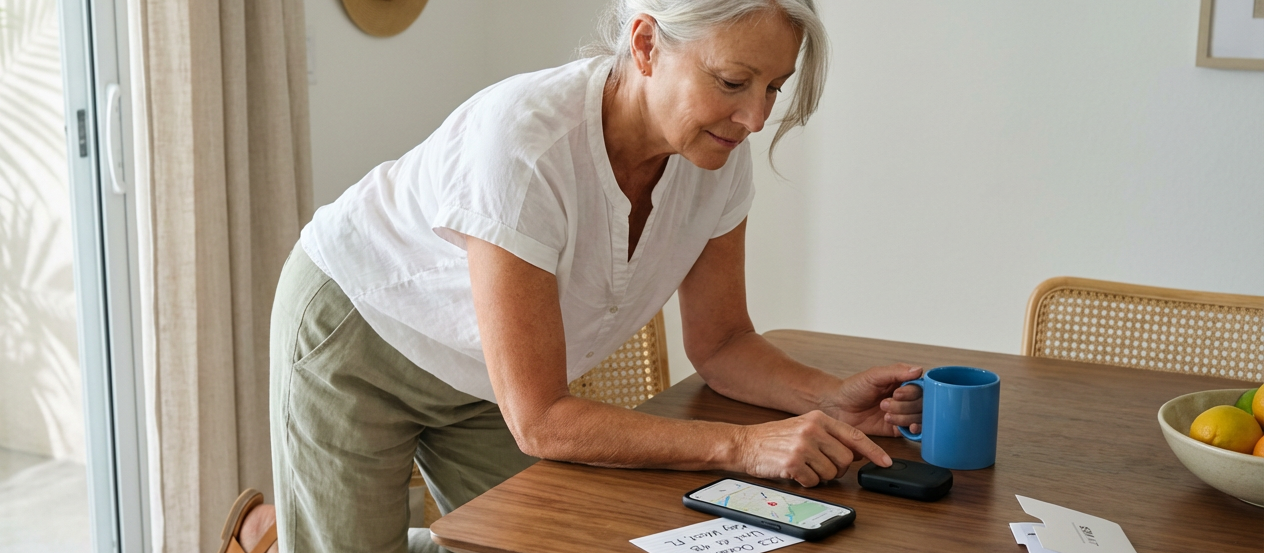
Holo Alert uses Wi-Fi positioning and cellular triangulation to pinpoint your exact coordinates, allowing us to direct US emergency responders to your specific location—not just your registered address.
Automatic Fall Detection
Fall detection is the single most important feature for snowbirds. In a vacation rental with unfamiliar flooring transitions or rugs, your risk of falling increases. If you fall and are knocked unconscious, you cannot press a button. Holo Alert's fall detection technology identifies the rapid change in orientation and impact, automatically triggering a call for help. We act as your voice when you cannot speak.
Don't leave your safety to chance. Secure your Holo Alert system today.
Winner vs. Loser: Mobile vs. In-Home Systems
Many seniors try to take their traditional landline-based medical alert systems with them when they travel south, but this often creates a false sense of security. In-home systems are restricted to a limited range from a base station, usually only a few hundred feet, which means protection ends as soon as someone leaves the driveway.
These systems are tied to a single static address, offer no real location tracking, and require unplugging and reinstalling equipment wherever you go. In contrast, a mobile GPS solution like Holo Alert provides continuous protection across Canada and the United States. It can be worn on a plane, in a car, or at the beach, with real-time GPS tracking and full emergency coverage wherever the wearer happens to be.
With simple out-of-the-box setup and no dependence on landlines or base stations, mobile systems offer the freedom and safety that traditional in-home systems simply cannot provide.
Protecting Your Finances and Health Coverage
Your provincial health plan (OHIP, MSP, etc.) provides very limited financial support outside Canada. They essentially abandon you at the border regarding emergency transport. US ambulance rides can cost thousands of dollars, and provincial plans rarely reimburse these costs.
While you likely have travel insurance, insurance companies prioritize "stabilization." The faster you receive care, the better your outcome, and the shorter your hospital stay. A Holo Alert system ensures that response times are immediate. Furthermore, we can notify your emergency contacts instantly, allowing them to alert your insurance provider to ensure you remain compliant with your policy's notification windows.
Crucial Setup Steps Before You Depart
Preparation prevents panic. Follow these steps to ensure your Holo Alert system is ready for the winter.
- Update Your Profile: Contact us one week before departure. We need your winter address, including unit numbers and gate codes. US responders cannot bypass security gates without this data.
- Designate Local Contacts: Your daughter in Toronto cannot help you up from a minor fall in Florida. Add a "local" contact—a neighbour in your park or a property manager—to your Holo Alert emergency list.
- Test Upon Arrival: The moment you arrive, press your button. Tell the operator you are testing from your new location. This confirms the device has successfully latched onto the local US network.
Frequently Asked Questions
Will my Holo Alert system work in Florida or Arizona?
Yes. Holo Alert mobile units are built with US cellular roaming capabilities. We utilize major networks like AT&T and T-Mobile to ensure you have coverage across the United States. Always verify your specific model with us before travelling, but our primary mobile devices are designed for this exact purpose.
Do I need a landline in my vacation rental?
No. Modern mobile medical alert systems use cellular networks and do not require a landline. This saves you money and hassle, as you do not need to pay for a landline service in a temporary rental or RV.
Can I wear my pendant in the pool?
Most Holo Alert devices are highly water-resistant, designed specifically for the shower where falls are most common. However, for deep submersion or swimming laps, check the specific rating of your device. See our guide on waterproof medical alert systems for more details.
What happens if I press the button by accident in the US?
Remain calm and wait for the operator. Simply state that it was a false alarm. Do not turn the device off; if you disconnect without speaking, we may assume you are incapacitated and dispatch US emergency services to your GPS location.
Secure Your Peace of Mind Today
Spending the winter in a warmer climate is a reward for years of hard work, but it should not come at the cost of your safety. The distance from your Canadian home necessitates a firm, reliable link to emergency services. A medical alert system isn't just a gadget; it is the only thing standing between a minor accident and a major crisis in a foreign country.
By choosing Holo Alert, you ensure that help is always a button press away, regardless of which side of the border you are on. Do not wait for a fall to realize you need protection.