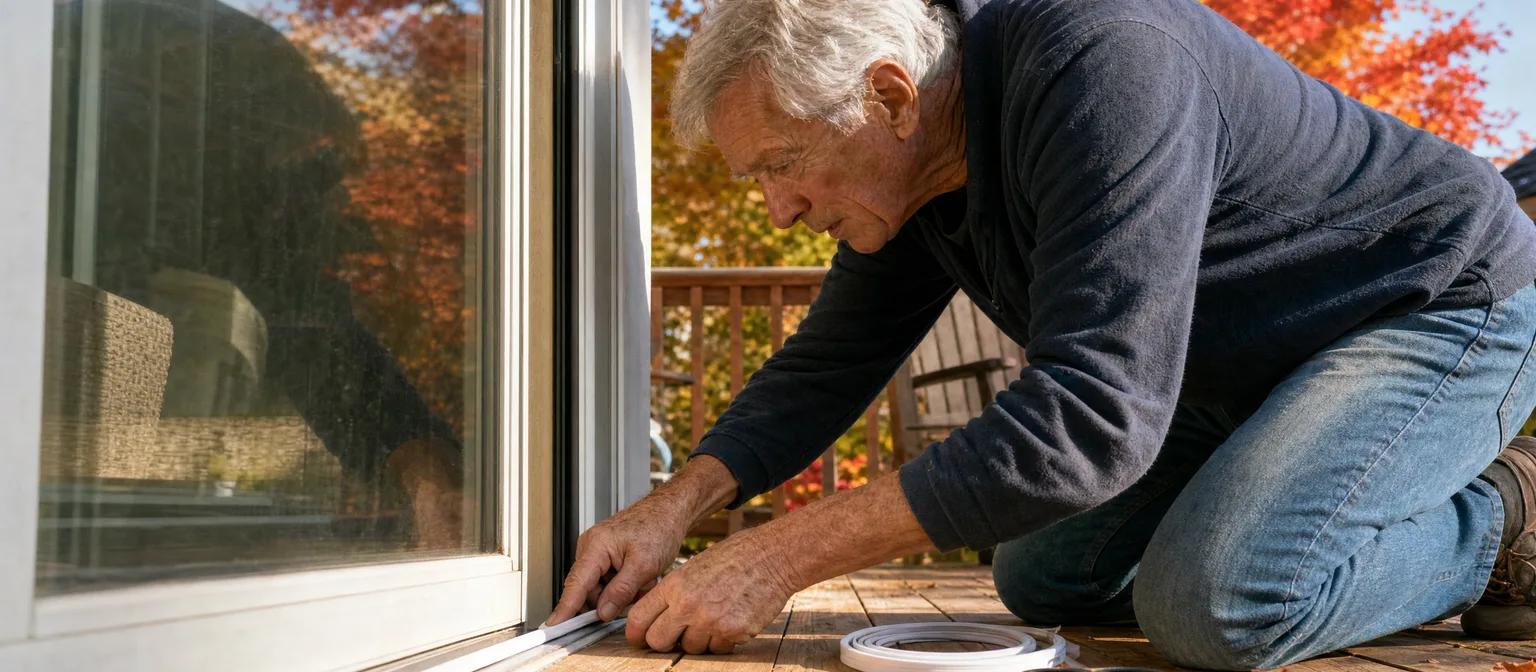
A Canadian home needs about a dozen jobs done between September and the first snow: clear the eavestroughs, shut off outdoor taps, tune up the furnace, test the alarms, and seal the drafts. The full checklist is below, sorted by month.
The senior version of this list has one extra column the home-improvement sites skip: who should actually do each job. Falls are the leading cause of injury hospitalization among Canadian adults 65 and older. In 2023-24 alone, more than 81,000 older adults were hospitalized after a fall, according to the Public Health Agency of Canada. A ladder in October is exactly the kind of risk worth planning around, not powering through.
So this checklist sorts every job three ways: do it yourself, do it with someone, or hire it out, with typical Canadian prices for the hired ones. It pairs well with our year-round aging in place checklist for Canadian homes.
The 12-job fall checklist
| # | Job | Best time | Do, share, or hire? |
|---|---|---|---|
| 1 | Book a furnace tune-up | September | Hire |
| 2 | Check weatherstripping on doors and windows | September | Do |
| 3 | Test outdoor lighting, replace dim bulbs | September | Do (ground level) |
| 4 | Check step railings, walkways, and driveway cracks | September | Do the check, hire the fixes |
| 5 | Clean or inspect the chimney (wood heat) | September, October | Hire |
| 6 | Clean eavestroughs and downspouts | October, after most leaves drop | Hire |
| 7 | Rake and do the big yard cleanup | October | Share or hire |
| 8 | Store patio furniture, hoses, and summer tools | October | Share |
| 9 | Check the roof from the ground with binoculars | October | Do the look, hire the repairs |
| 10 | Disconnect hoses, shut off and drain outdoor taps | Before the first hard frost | Do |
| 11 | Test smoke and carbon monoxide (CO) alarms, change batteries | November 1, when clocks change | Do |
| 12 | Stock ice melt and set the shovel by the door | Before the first snow | Do |
Screenshot this table, stick it on the fridge, and the rest of the article is the why and the how much.
Outside jobs for September and October
Eavestroughs are the classic hire-out. Clogged troughs send meltwater into foundations and turn walkways into skating rinks, but clearing them means a ladder and awkward reaching. Professional eavestrough cleaning typically runs $150 to $325 for an average Canadian home (Taskrabbit Canada, 2026). That is cheap insurance measured against what a fall from a ladder can cost.
If a job needs a ladder, the smartest tool is someone else's ladder.
Outdoor taps are the best-paying five minutes of your fall. Disconnect hoses, shut off the outdoor water supply, and open the taps to drain them. Canadian insurers advise doing this in the fall because outdoor lines freeze first. Square One Insurance pegs the average burst-pipe repair at about $16,000. The Insurance Bureau of Canada adds that coverage for frozen pipes can depend on having taken reasonable steps to maintain heat in the home.
Walkways and railings get a slow inspection walk. Rock every railing, look for heaved or cracked pavement, and note what needs a contractor while the weather still allows the work. A full fall yard cleanup, if you hand that off too, typically costs $150 to $500 depending on yard size (Taskrabbit Canada, 2026).
Inside jobs before the heat comes on
Get the furnace tuned before the cold snap, not during it. Health Canada recommends a professional inspection of fuel-burning appliances at least once a year, and a furnace tune-up typically costs $70 to $250 in Canada (HomeStars, 2025). September booking beats the November rush.
Carbon monoxide alarms have new rules in Ontario. As of January 1, 2026, Ontario's Fire Code requires CO alarms next to every sleeping area and on every storey of homes with a fuel-burning appliance, fireplace, or attached garage (Technical Standards and Safety Authority, 2025). Wherever you live in Canada, Health Canada advises a certified CO alarm outside every sleeping area. If your house has fewer alarms than storeys, this is the month to fix that.
Batteries change when the clocks do. Fire services across Canada suggest testing alarms and changing replaceable batteries at the fall time change, which lands on November 1 this year. One 2026 twist: if you live in BC, Alberta, Yukon, or most of Saskatchewan, your clocks no longer change, so tie the battery check to a fixed date like Thanksgiving weekend instead.
Seal drafts while the hardware store shelves are full. Press-on foam weatherstripping is a satisfying ground-level job that pays back all winter in comfort and heating costs. While you are at it, moving boxes and clutter out of hallways and off basement stairs is one of the highest-value fall jobs of all; our guide to decluttering to prevent falls at home shows where to start.
Which jobs should you hire out?
The triage rule is simple: anything that needs a ladder, a roof, or a crawl under the house gets hired out or handed to a younger set of knees. That covers eavestroughs, chimney work, roof repairs, and second-storey windows. Budget roughly $150 to $325 for eavestrough cleaning, $70 to $250 for a furnace tune-up, and $150 to $500 for a full yard cleanup, using the dated Canadian figures above, and get two quotes for anything bigger.
Sharing works too. A neighbour's teenager rakes; you supervise with coffee. An adult son or daughter takes the ladder jobs during a weekend visit; you hold the base and run the show. The work still gets done your way, which is the part that matters.
If the inspection walk turns up bigger accessibility fixes, like a new railing or a ramp, the federal Home Accessibility Tax Credit can return part of that cost at tax time.
Working safely while you're out there
For the jobs you keep, stack the odds your way. Work in daylight on dry ground, wear shoes with real tread, keep one hand free on stairs, and split the list over several weekends instead of one marathon Saturday. Cold mornings stiffen everyone up; the second coffee is a legitimate safety tool.
It is also worth knowing exactly what to do if a fall happens before one ever does, the same way you learn where the fire extinguisher is.
Falls Prevention Awareness Week runs September 21 to 25 this year in the United States, and Canada holds its own Fall Prevention Month every November. The tidy coincidence: the weeks in between are precisely when Canadians are out on stepstools and wet lawns getting their homes ready.
Frequently asked questions
How do you prep your house for fall?
Work top to bottom, outside to inside: clear the eavestroughs, check the roof from the ground, shut off and drain outdoor taps, tune up the furnace, test smoke and CO alarms, seal drafts, and stock winter supplies by the door. Spread the jobs across September and October, and hire out anything involving a ladder.
When should you shut off outside taps?
Before the first hard frost hits your area. Disconnect and drain hoses, close the indoor shutoff valve for outdoor lines, then open the outside taps so trapped water can drain. Canadian insurers recommend it because outdoor lines freeze first, and a burst pipe averages about $16,000 to repair (Square One, 2024).
How often should a furnace be serviced?
At least once a year, according to Health Canada's guidance for fuel-burning appliances. Book in September before the seasonal rush, expect to pay roughly $70 to $250 (HomeStars, 2025), and pair it with fresh furnace filters and a carbon monoxide alarm check for a complete heating-season tune-up.
When do the clocks change in fall 2026?
Clocks fall back on Sunday, November 1, 2026 in provinces that still change, including Ontario and the Atlantic provinces. BC and Alberta have ended seasonal time changes, and Yukon and most of Saskatchewan stopped years ago, so residents there should tie alarm-battery checks to a fixed date instead.
Finish the list, then relax into the season
Twelve jobs, two months, and most of the risky ones handed off: that is a fall well spent, and a winter you meet on your own terms. When the list is done, our winter safety guide for Canadian seniors picks up where this one leaves off.
One honest addition for anyone working alone in the yard this fall: this is exactly the season a medical alert makes quiet sense. Holo Alert devices come with fall detection included and work anywhere in Canada with cellular coverage, no smartphone needed, so help is one button away whether you are raking the back corner or down the basement stairs. To talk through which device fits, compare Holo Alert devices or call 1-888-445-0192. Every plan is backed by the 10-day risk-free guarantee.