Let's be honest about the Canadian winter. It isn't just about picturesque snowfalls or holiday cards; it is a season of heightened danger for older adults. As temperatures plummet across the provinces, the risk of life-altering injuries spikes.
Ice doesn't care about your plans, and hypothermia sets in faster than most people realize. Understanding winter safety is not merely about comfort—it is about survival and preserving your independence. The environmental hazards, from "black ice" to freezing rain, create a gauntlet that leads to thousands of hospitalizations every year.
You cannot control the weather, but you can control how you prepare for it. Relying on luck is not a strategy; proactive protection is.
Key Takeaways
- Footwear is Your Foundation: Boots with specific non-slip rubber treads and ice cleat compatibility can reduce fall risks by nearly 70%.
- The "Penguin Walk" Works: Shifting your centre of gravity forward and taking short, flat steps drastically improves stability on ice.
- Delegation Saves Lives: Shovelling snow is a leading cause of heart strain and falls; delegate this task to stay out of the ER.
- Technology is a Lifeline: Carrying a medical alert system with GPS and fall detection ensures that if you do slip, you aren't left freezing in the snow.
The Hidden Dangers of the Canadian Freeze
Winter months consistently bring a surge in emergency room visits for seniors across Canada. The combination of snow, ice, and freezing rain turns familiar driveways into hazard zones. However, the risk isn't just under your feet.
Reduced daylight hours compromise visibility, making it nearly impossible to spot patches of black ice until it's too late. Physiological changes exacerbate these external risks. Slower reflexes, balance issues, and medication side effects can delay your reaction time during a slip.
More critically, seniors are susceptible to "cold stress." As we age, our ability to regulate body temperature diminishes. If you fall outdoors and cannot get up, hypothermia is a rapid and silent killer. Health Canada reports that adults over 65 have a 50% higher risk of cold-related injuries.
The Holo Alert Protection
This is why a standard cell phone isn't enough. In a fall, you may be too stunned or injured to dial 911. Holo Alert devices feature automatic fall detection. If the device senses a sudden drop followed by no movement, it calls for help automatically, ensuring you aren't left stranded in the cold.
Strategic Planning: Outings and Pace
Navigating winter requires military-grade planning. If Environment Canada issues a freezing rain or extreme cold warning (specifically -20°C or lower), stay inside. No errand is worth a fractured hip.
If you must go out, stick to main municipal routes that are salted and well-lit, avoiding shortcuts through parks where snow packs into slippery trails. Rushing is the enemy of safety. Allow double the travel time so you can move deliberately.
Communicate your route and expected return time to a neighbour or family member. Isolation is dangerous in winter; ensure someone knows where you are. Don't face the ice alone. Secure your safety with a device that works everywhere you go. Shop the Holo Alert Pro.
Your Armour: Footwear and Visibility
According to the Canadian Centre for Occupational Health and Safety, proper footwear can reduce fall risks by approximately 68%. This is the single most impactful gear decision you will make.
Traction and Materials
Avoid fashion boots with hard plastic soles that stiffen and slide in the cold. You need soft rubber compounds that grip the ice. Look for boots explicitly rated for Canadian winters with deep, non-slip treads. If the boot isn't function-first, leave it on the shelf.
Insulation is Safety
Cold feet become numb feet. Numbness reduces your proprioception—the ability to feel the ground and maintain balance. Choose waterproof, insulated boots that keep your feet warm and responsive.
Walking Techniques: The "Penguin Walk"
When you hit a patch of ice, forget your normal stride. You need to adopt the "Penguin Walk" to keep your footing.
- Centre of Gravity: Lean slightly forward so your weight is directly over your front leg.
- Flat Feet: Take short, shuffling steps. Keep your feet flat rather than rolling heel-to-toe.
- Arms Out: Get your hands out of your pockets. You need them for balance (like a tightrope walker) and to break a fall if necessary.
Comparison: Winter-Ready vs. Standard Mobility Aids
| Equipment Type | Winter-Ready | Standard |
|---|---|---|
| Canes | Retractable ice-pick tips that bite into icy surfaces | Rubber tips that tend to slide immediately on snow or ice |
| Walkers | Larger wheels with treaded or tire-style surfaces that move safely over packed snow | Small plastic wheels that easily get stuck or skid |
| Walking Poles | Carbide tips and snow baskets provide reliable traction and stability | Standard trekking poles without proper grip offer little protection on slippery winter ground |
Home Exterior: The Danger Zone
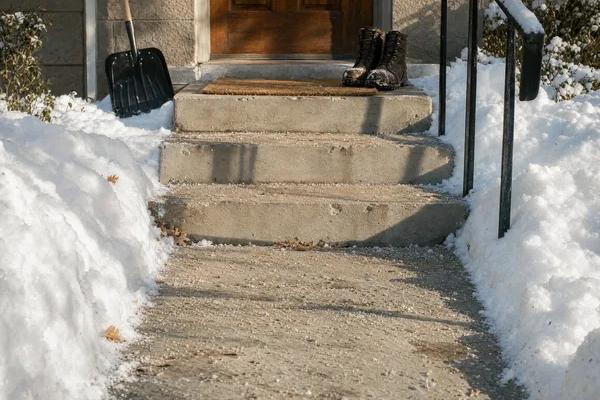
Most falls happen close to home. Shovelling is a high-intensity exertion that raises your heart rate and blood pressure rapidly in cold air—a known trigger for heart attacks in seniors. Do not shovel. Delegate this to a "Snow Angel" service, a neighbour, or a professional.
Focus on ice management. Keep a bucket of salt (sodium chloride) or non-clumping cat litter near the door. Even a thin layer of grit can provide the traction needed to get from the door to the car safely. Ensure motion-sensor lights are active; you cannot avoid ice you cannot see.
Why Generic Alarms Fail in Canadian Winters
When selecting safety tech for winter, reliability is non-negotiable. Many generic "home-based" systems rely on a landline base station. If you fall while getting the mail at the end of a long driveway, you are likely out of range. That silence can be fatal in January.
Holo Alert is engineered for the reality of Canadian seniors. We utilize GPS tracking and cellular connectivity, meaning your protection extends to the sidewalk, the grocery store parking lot, and the park. If you slip on black ice, our operators can pinpoint your exact location to dispatch EMS immediately.
Furthermore, Holo Alert devices are water-resistant. Snow and slush won't disable your lifeline. Combined with 24/7 monitoring, you have a human connection ready to assist the moment a crisis occurs. Winter creates isolation, but you never have to be alone. Get 24/7 GPS protection with Holo Alert.
Frequently Asked Questions
What is the most important winter safety tip for preventing falls?
The most critical tip is prevention through proper gear. Wearing winter boots with non-slip rubber soles and using ice cleats significantly reduces the chance of slipping. Additionally, carrying a personal alarm with fall detection ensures that if prevention fails, rescue is immediate.
How do I safely use ice cleats?
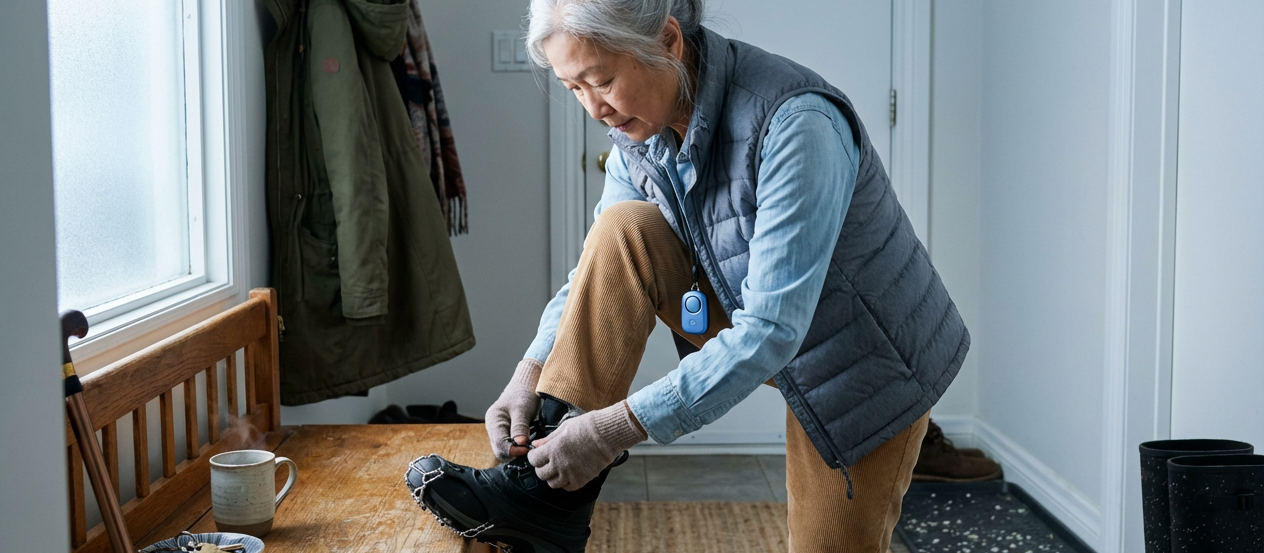
Ice cleats are highly effective outdoors but dangerous indoors. Always sit down to put them on or take them off to maintain balance. Remove them immediately upon entering a building, as the metal spikes will slide on hard floors like tile or wood, creating a new fall hazard.
Why is shovelling snow dangerous for seniors?
Shovelling combines heavy physical exertion with cold air, which constricts blood vessels. This dramatically increases blood pressure and heart strain, raising the risk of heart attacks. The motion of twisting and lifting also poses a severe risk for back injuries and falls on slippery driveways.
Does Holo Alert work if I fall outside my house?
Yes. Unlike older landline systems, Holo Alert uses cellular networks and GPS technology. Whether you are in your backyard, down the street, or across town, the device connects you to our monitoring centre and allows responders to locate you quickly.
Don't Let Winter Limit Your Freedom
Fear of falling shouldn't keep you a prisoner in your own home this winter. By equipping yourself with the right footwear, adopting safer walking habits, and securing your peace of mind with Holo Alert, you can navigate the season with confidence. The risks are real, but the solution is simple: prepare, protect, and stay connected.