As we get older, our social world tends to shrink. Retirement removes the daily interactions we took for granted. Friends and loved ones move away or pass on. Canadian winters make it hard to get out the door for months at a time. And health challenges can make even a short outing feel daunting.
It happens gradually. One week you skip your usual coffee date. The next, you realize it's been a month since you've seen a friend. Before long, the days start to feel quieter than they should.
Here's why that matters more than most people realize: according to Canada's National Institute on Ageing, 43% of Canadians over 50 are at risk of social isolation. And those numbers haven't improved since 2022, even though pandemic restrictions are long gone. The Government of Canada has found that social isolation can increase the risk of early death at a rate comparable to smoking 15 cigarettes a day. It's linked to higher rates of dementia, heart disease, depression, and falls.
The good news? You don't need to overhaul your life to stay connected. Small, consistent steps - the kind that fit into your regular routine - can make a real difference for your health, your mood, and your quality of life.
Here are 12 practical ways to stay socially active as you age.
1. Understand Why Social Connection Matters So Much
Before we get into the how, it helps to understand the why. Social connection isn't just about having fun (though that matters, too). It's one of the most significant factors in healthy aging.
Research from the University of Waterloo found that people who were both socially isolated and lonely experienced the greatest decline in memory over six years. The National Institute on Aging has linked social isolation to higher risks of high blood pressure, heart disease, obesity, depression, cognitive decline, and Alzheimer's disease. A study tracking over 10,000 participants found that people who visited with friends almost daily were 12% less likely to develop dementia.
In Canada specifically, the Canadian Institute for Health Information (CIHI) reported that 14% of Canadian seniors experience depression, anxiety, or other mental health challenges - and among those seniors, 94% also live with chronic physical conditions. Social connection isn't separate from physical health. They're deeply intertwined.
2. Know the Difference Between Loneliness and Social Isolation
These two terms are often used interchangeably, but they mean different things - and recognizing the difference can help you figure out what kind of support you actually need.
Social isolation is about the objective lack of contact with other people. It means having few relationships, little regular interaction, and limited support from others.
Loneliness is a feeling. It's the sense of being disconnected or not close to others - and it can happen even when you're surrounded by people.
You can live alone and not feel lonely. You can also feel deeply lonely in a room full of family. Statistics Canada data shows that about 1.1 million Canadians aged 65 and older reported experiencing loneliness in 2019/2020. Widowed, separated, or never-married seniors are more than twice as likely to be lonely as those who are married.
Understanding where you fall on this spectrum matters because the solutions are different. If you're isolated, you need more contact and more opportunities to connect. If you're lonely despite having people around, the answer might be deeper, more meaningful relationships - not just more activity. For a deeper look at this topic, read our guide on overcoming loneliness in older adults through connection and community.
3. Recognize What Makes It Harder to Stay Connected in Canada
Staying socially active gets harder with age everywhere in the world. But Canada presents some unique challenges that are worth naming, because understanding them helps you plan around them.
Retirement creates a vacuum. When you leave the workforce, you lose a built-in social network. People you saw every day simply disappear from your routine. Weekly participation in social, recreational, or group activities among older Canadians actually dropped from 39% in 2024 to 33% in 2025. The transition out of work leaves a gap that many people don't plan for.
Loss of loved ones changes everything. Losing a spouse, a sibling, or close friends reshapes your social world in ways that are hard to prepare for. Canadian data shows that widowed seniors are more than twice as likely to experience loneliness as those who are married.
Canadian winters are a real barrier. This isn't just about the cold. Research has shown that fall risk remains elevated for up to seven days after a major snowstorm. During extreme cold or ice storms, many seniors become effectively homebound - unable to walk safely to a car, let alone attend a community event. Walking groups stop. Outdoor activities shut down. The isolation that winter creates can last five to seven months in many parts of the country. For more on staying safe during the colder months, see our guide to winter safety for seniors in Canada.
Distance and geography matter. Canada is the second-largest country on earth by land area, but it has one of the lowest population densities among developed nations. Seniors living in rural or remote communities may be hours from the nearest gathering place. Family members often live in different cities - or different provinces entirely.
Language barriers affect immigrant seniors. Immigrants now make up nearly one-third of Canada's population aged 65 and older. Among immigrant seniors who arrived within the past five years, 63% reported being unable to speak English or French. Without the language to connect, social opportunities shrink dramatically.
None of these barriers are reasons to give up. But they are reasons to be intentional about building connection into your life - and to not blame yourself if it feels harder than it used to.
4. Join a Club or Group That Matches Your Interests
This is the most consistent piece of advice across every study and every expert, and for good reason: shared interests are the easiest foundation for friendship at any age.
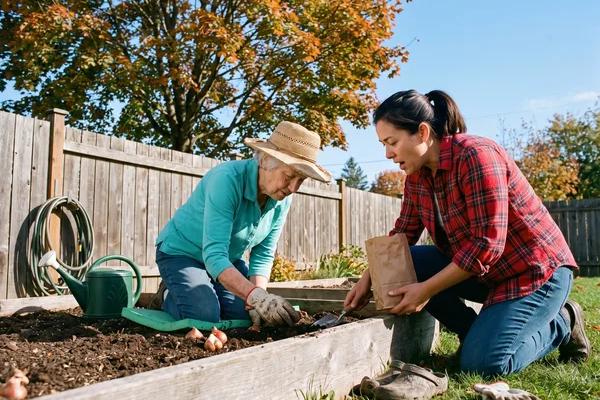
Think about what you enjoy. Reading? Gardening? Playing cards or board games? Woodworking? Singing? Whatever it is, there's likely a group for it at your local community centre, library, or place of worship.
One model that's growing quickly across Canada is Men's Sheds - community spaces where older men come together to work on hands-on projects, share skills, and build friendships. The concept is built on the idea that men often connect more naturally "shoulder to shoulder" while doing something, rather than sitting face to face. Men's Sheds Canada has been a registered charity since 2022, and new sheds are opening regularly.
About 80% of older Canadians participate in at least one social activity, whether it's through a club, a faith group, a class, or time with family and friends. If you're not doing that yet, picking just one group to join is a powerful starting point.
Tip: Consistency matters more than variety. Showing up to the same group regularly is how acquaintances become friends.
5. Volunteer - and Gain More Than You Give
Volunteering is one of the most effective ways to stay socially active while also finding a sense of purpose. And Canadian seniors who volunteer don't just participate - they lead.
Statistics show that seniors aged 65 to 74 contribute more volunteer hours than any other age group in Canada, averaging 231 hours per year. That's nearly an hour for every weekday. And 95% of senior volunteers say that making a contribution to their community is their top reason for doing it. But more than half also say they volunteer specifically to meet people and build their network.
If health or mobility makes traditional volunteering difficult, there are lighter-touch options: phone-based programs, mentoring, helping at a library, or lending your skills to a community organization from home.
The biggest barrier? According to Canadian data, 70% of seniors aged 75 and older cite physical limitations as the main thing restricting their ability to volunteer. Start with what your body allows, even if it's just a couple of hours a month. The social benefits add up quickly.
6. Stay Physically Active With Others
Physical activity and social connection don't have to be separate goals. Some of the best options for staying healthy also happen to be the most social.
Walking groups, aquatic exercise classes, tai chi, chair yoga, pickleball - all of these get you moving while putting you in the same room (or on the same path) with other people. Data from the Canadian Longitudinal Study on Aging found that seniors who participated in recreational activities had 15% higher odds of achieving what researchers call "successful aging."
If a regular gym feels intimidating, look for programs specifically designed for older adults. Many community centres and recreation facilities across Canada offer senior-focused fitness classes that are welcoming, low-pressure, and built around socializing as much as sweating.
Tip: The best exercise for social connection is the one you'll actually show up for consistently. Choose something you enjoy, not something that feels like a chore.
7. Take a Class and Keep Learning
Learning something new is good for your brain. Doing it alongside other people is good for your social life. Combining the two is one of the smartest things you can do for healthy aging.
Community colleges, adult education centres, and libraries across Canada offer programs specifically for older adults. The Toronto Public Library, for example, recently received a historic investment specifically to expand programming for seniors that addresses loneliness and social isolation.
The subject doesn't matter as much as the act of showing up regularly, being around curious people, and stretching your mind. Art classes, creative writing workshops, history lectures, technology tutorials, language courses - all of them create natural opportunities for conversation and connection.
8. Use Technology to Bridge the Distance
If family and friends are spread across the country (as they so often are in Canada), technology can help close the gap.
The numbers here are encouraging. As of 2022, 82.6% of Canadian seniors aged 65 and older use the internet - up significantly from just a few years ago. About two-thirds own a smartphone, and video calling among seniors doubled between 2019 and 2020 during the pandemic.
There are also Canadian-made platforms designed specifically for older adults. Amintro is a social platform exclusively for Canadians 50 and older, built to help people find non-romantic friendships and shared experiences. Seniors' Centre Without Walls programs in Alberta, Manitoba, and Ontario offer free interactive activities by phone and video that you can join from your living room. And Uniper Care Technologies connects seniors through phones, tablets, computers, or even a TV.
That said, it's important to be honest about the digital divide. The most vulnerable seniors - those with low incomes, limited education, or living in rural areas without reliable internet - are the least likely to benefit from digital solutions. Technology is a helpful tool, but it's not the only tool.
Tip: If technology feels intimidating, ask a family member or visit your local library for help getting set up. Even learning to make video calls can transform how often you connect with people who live far away.
9. Look Into Canadian Programs Designed to Help
One thing that stood out in the research for this article is how many programs exist across Canada specifically to help seniors stay connected. The challenge isn't usually that the programs don't exist - it's that people don't know about them.
Here are a few worth knowing:
New Horizons for Seniors Program (NHSP): The federal government's flagship program for senior social inclusion. It invests $70 million annually and supports over 900,000 seniors through community-based projects, including everything from computer classes to intergenerational activities to meal programs.
Seniors' Centre Without Walls: Available in Alberta, Manitoba, and Ontario, this free telephone-based program offers interactive activities - book clubs, trivia, health presentations, social gatherings - for adults 55 and older who face barriers to in-person programming. An evaluation of the Alberta program found significant reductions in loneliness among participants.
Keeping Connected Program: A national program that provides regular telephone companionship to isolated seniors. You can sign up through a toll-free number (1-844-KEEP-CON) and get matched with a trained companion who calls regularly.
TeleCheck Program for Seniors: Run by the Distress Centres of Greater Toronto, this program provides regular phone check-ins, emotional support, and companionship in eight languages including English, Mandarin, Cantonese, Urdu, Punjabi, Hindi, Portuguese, and Spanish.
Canadian Institute for Social Prescribing: A growing movement where healthcare providers connect patients - including isolated seniors - to community-based activities and support. Ask your doctor if social prescribing is available in your area.
Your local community centre, library, or municipal government likely has additional programs. A quick phone call to your city's seniors' services line can reveal options you didn't know existed.
10. Build Connections Across Generations
Some of the most rewarding social connections don't come from your own age group. Intergenerational relationships - spending time with younger people - offer unique benefits for both sides.
Programs where older adults read to children in schools, mentor young people, or teach a skill they've spent a lifetime developing are growing across Canada. The New Horizons for Seniors Program funds many of these intergenerational projects. And the research supports the approach: studies show that when seniors engage in meaningful activities with younger generations, their cognitive, physical, and social activity all increase.
Even informal connections count. Spending time with grandchildren, helping a neighbour's teenager with a project, or joining a community group that spans age ranges can bring fresh energy and perspective to your social life.
11. Schedule Social Time Like You Would an Appointment
Here's something that might sound simple but makes a real difference: treat social time like a commitment, not an afterthought.
The NIA's 2025 survey found that 41% of older Canadians say they participate in social activities less than they'd like. The top barriers? Affordability, health, lack of energy, and not having anyone to go with.
Those barriers are real. But one of the most effective ways to work around them is to build social contact into your routine the same way you'd schedule a medical appointment or a grocery run.
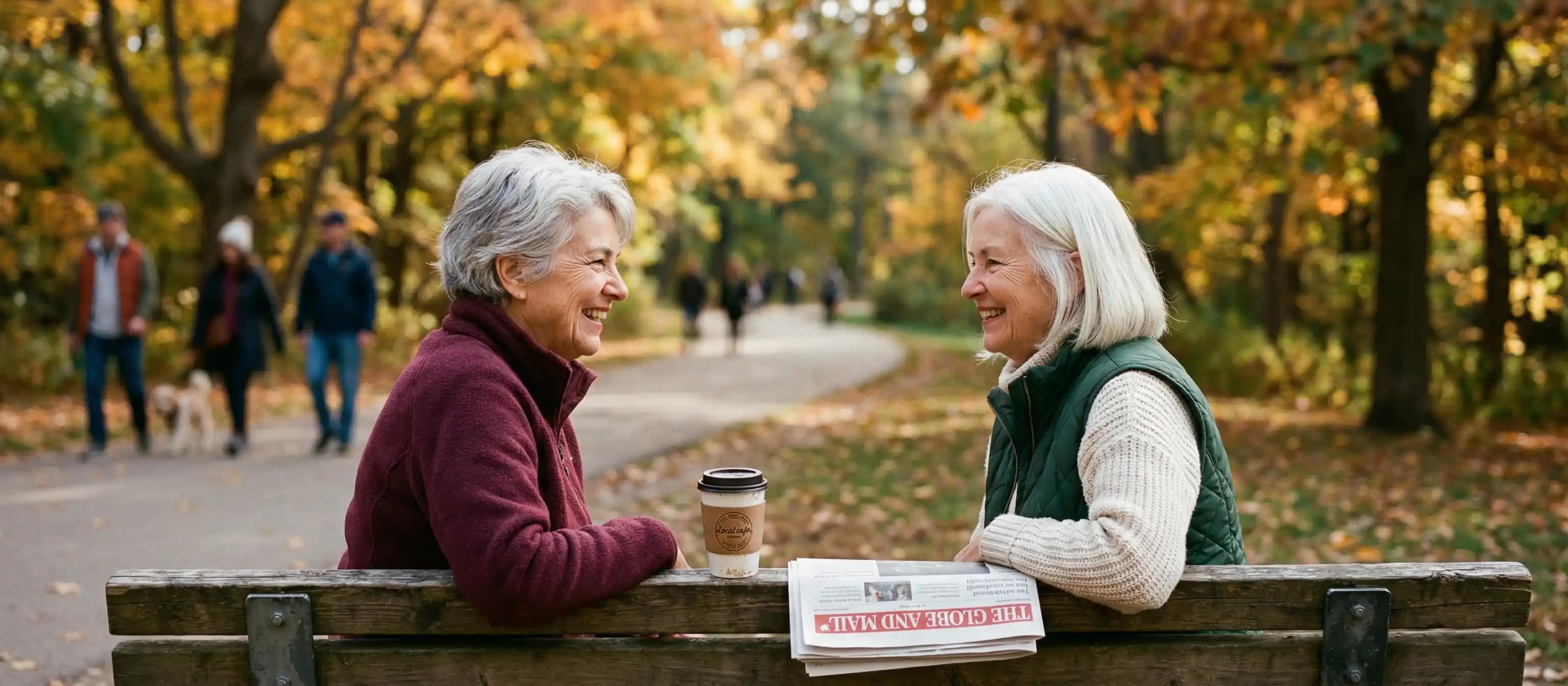
Set a weekly phone call with a friend or family member. Create a standing coffee date every Tuesday. Join a group that meets on the same day each week. When social time has a spot on your calendar, it's far more likely to happen - even on days when your energy is low or the weather is miserable.
Even small, brief interactions add up. Chatting with a neighbour. Calling a friend for ten minutes. Saying hello to the regulars at your local coffee shop. Connection doesn't have to mean a full afternoon out.
12. Don't Let Safety Concerns Keep You Home
For many seniors - and for the adult children who care about them - one of the biggest unspoken barriers to staying socially active is worry. What if I fall while I'm out? What if something happens and no one is nearby to help? What if I feel unwell at a community event?
That worry is understandable. Falls are the leading cause of serious injury among Canadian seniors. And the fear of falling can become its own form of isolation - keeping people home even when they're physically capable of going out. To better understand the factors behind falls, read our article on why Canadian seniors fall and 7 ways to stay steady.
This is where having a personal safety plan can make a real difference. A medical alert device that works outside the home - not just within your four walls - can give you and your family the confidence to stay active. Features like automatic fall detection, 24/7 professional monitoring, and a simple one-button connection to help mean that you're never truly on your own, even when you're out living your life.
The goal isn't to be fearful. It's to remove the fear as a barrier so you can keep doing the things that keep you healthy and connected.
Your Social Life Is Worth Protecting
Staying socially active as you age isn't a luxury. It's one of the most important things you can do for your physical health, your mental sharpness, and your overall quality of life. The research is clear: connection protects your brain, strengthens your heart, lifts your mood, and may even help you live longer.
It's also not always easy - especially in Canada, where distance, weather, and life transitions can make staying connected feel like an uphill climb. But it doesn't have to be complicated. Pick one idea from this list. Start small. Show up consistently. And give yourself credit for every connection you make, no matter how brief.
If safety concerns are what's keeping you or a loved one from getting out more, a medical alert system can help you stay independent and confident wherever life takes you. Learn how Holo Alert can help.