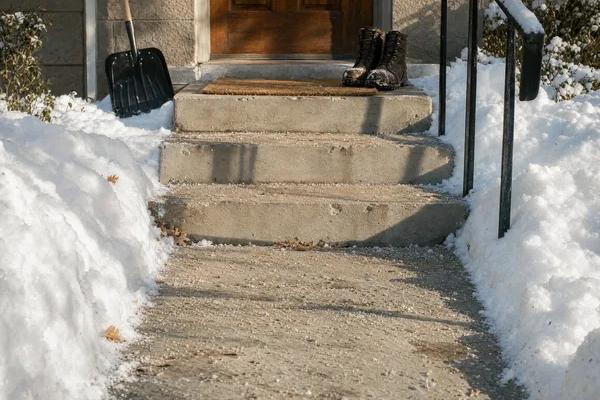
Muscle loss isn't just a cosmetic issue—it is the single biggest threat to your independence. As we age, the natural decline in muscle mass (sarcopenia) and bone density drastically increases the likelihood of a life-altering fall. In Canada, where icy sidewalks and harsh winters often trap seniors indoors for months, the risk of deconditioning is even higher.
You do not need an expensive gym membership or complex machinery to fight back. You need a strategy. By implementing a consistent routine of strength and balance exercises in your living room, you can harden your body against injury. However, exercising alone carries its own risks.
This guide will teach you how to build strength safely, how to clear your home of hazards, and why relying on physical strength alone is often not enough to guarantee your safety.
Key Takeaways
- Combat Sarcopenia: You can reverse muscle loss using only your body weight and a sturdy chair.
- Hazard Removal: Before you move, you must clear the "trip zones" (rugs, cords) in your home.
- The 20-Minute Rule: Aim for exercises 2–3 times per week to see measurable improvements in stability.
- Smart Modifications: Arthritis and osteoporosis require specific adjustments to prevent injury during workouts.
- The Safety Gap: Even the strongest seniors fall. A medical alert system fills the gap between an accident and a tragedy.
Why the Living Room is Your Best Defense Against Aging
Choosing to exercise at home is a strategic decision for long-term survival. Regular physical activity is the only proven method to restore bone density and prevent fractures. According to Canadian health data, falls remain the leading cause of injury-related hospitalizations among seniors.
Strength training directly counters this by building the muscle necessary to stand up from a chair, climb stairs, and recover if you lose your balance. However, many Canadian seniors face barriers to traditional fitness centres, including lack of transportation, cost, or the intimidation of group settings. Home-based programs eliminate these excuses.
A study originally conducted in 1994 and confirmed by modern meta-analyses showed that high-intensity strength programs improved mobility in adults as old as 87.
The "Solo Exercise" Risk Factor
While home exercise builds strength, it introduces a new variable: isolation. If you experience a cardiac event or a fall while exercising alone, who will know? Holo Alert bridges this gap. Our systems ensure that if you push yourself too hard and suffer a fall, help is summoned immediately—even if you cannot speak.
Looking for peace of mind while you stay active? Shop the Holo Alert Pro.
Safety First: Medical Checks and Hazard Removal
Before you move a single muscle, you must establish a foundation of safety. Unsupervised exercise is generally safe, but only if the environment is controlled. Research suggests that programs with safety nets—such as medical alert systems or check-ins—are far more effective because they reduce the fear of falling, allowing seniors to move with confidence.
Do not start a new regimen without consulting your healthcare provider, especially if you have a history of heart conditions or respiratory issues.
Comparison: Unprotected vs. Protected Home Fitness
Exercising without a safety net is a gamble. Here is how Holo Alert changes the equation:
| Safety Factor | ✅ With Holo Alert | ⚠️ Standard Home Routine |
|---|---|---|
| Fall Consequence | Automatic Fall Detection alerts 24/7 monitoring centre. | Risk of "Long Lie" (lying on floor for hours waiting for help). |
| Medical Episode | One-press connection to operators who know your history. | Reliance on reaching a phone that may be out of reach. |
| Confidence Level | High: You push harder knowing you are safe. | Low: Fear of injury limits movement intensity. |
Red Flags: When to Stop Immediately
Listen to your body. If you experience chest pain, severe shortness of breath, or dizziness, stop immediately. These are not signs of "working hard"; they are warning signs. With Holo Alert, a simple press of your button connects you to a live operator who can assess if emergency services are required.
The Equipment-Free Full-Body Routine
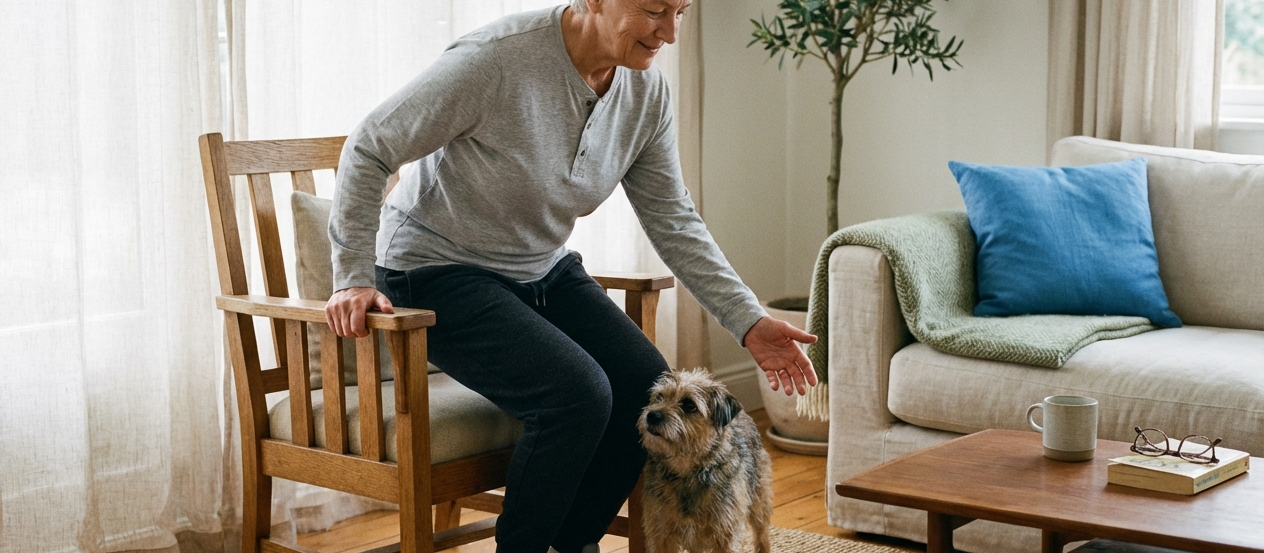
You do not need dumbbells. Your body weight is sufficient resistance. Perform this routine in order, moving slowly and deliberately.
1. Warm-up: Marching in Place
Purpose: Increases blood flow and prepares the heart. Stand tall next to your chair for support. Lift your knees alternately as if marching. Swing your arms gently. Continue for 2–3 minutes.
2. Strength: Chair Squats (Sit-to-Stand)
Purpose: This is the functional movement required to get off the toilet or out of a car. It strengthens quadriceps and glutes. Stand in front of a sturdy chair with feet hip-width apart. Push your hips back and bend your knees to lower yourself toward the seat. Tap the seat lightly with your glutes (do not collapse), then push through your heels to stand back up.
Safety Note: Keep your chest up. If you feel unsteady, perform this with a caregiver or while wearing your Holo Alert pendant.
3. Balance: Single-Leg Stands
Purpose: Improves ankle stability to prevent trips on uneven sidewalks. Stand behind your chair, holding the backrest. Lift one foot slightly off the floor. Hold for 10–30 seconds. Repeat on the other leg.
4. Mobility: Seated Leg Lifts
Purpose: Targets hip flexors while supporting the lower back. Sit tall in your chair with feet flat. Straighten one leg out in front of you. Lift the straight leg a few inches off the floor. Hold for one second. Lower slowly. Perform 8–10 lifts per leg.
Don't let a slip turn into a hospital stay. Secure your safety with Holo Alert today.
Balance Protocols for Fall Prevention
Why do Canadian seniors fall? Often, it is a degradation of the vestibular system. Specific balance exercises can recalibrate your stability.
Heel-Toe Walking (Tandem Walking)
This narrows your base of support, forcing your balance systems to engage. Setup: Stand next to a wall or counter. Action: Place the heel of one foot directly in front of the toes of the other foot. Movement: Take 10 steps in a straight line, placing heel-to-toe each time. Focus: Keep your eyes up. Looking at your feet actually decreases your balance.
The Reality Check: While these exercises reduce risk, they cannot eliminate it entirely. A wet floor or a sudden drop in blood pressure can still cause a fall. Holo Alert's Smart Fall Detection technology ensures that if gravity wins, you aren't left helpless.
Strength-Building Without Equipment
To fight sarcopenia, you must challenge your muscles. These movements use gravity against you to build resilience.
Wall Push-Ups (Upper Body)
Face a wall, standing slightly more than arm's length away. Place palms flat against the wall at shoulder height. Lower your chest toward the wall, keeping your body in a stiff plank. Push back to the start. Aim for 8–12 reps.
Side Leg Lifts (Hips and Glutes)
Stand behind a sturdy chair. Lift one leg out to the side slowly. Do not lean your torso to the opposite side. Lower slowly. This strengthens the hips, which stabilizes the pelvis during walking.
Modifications for Arthritis and Osteoporosis
Pain is not a reason to stop; it is a reason to adapt. Motion creates synovial fluid, which lubricates arthritic joints. However, you must be smart about it.
Arthritis Adjustments
If standing squats hurt your knees, switch to seated leg extensions. Focus on low-impact movements that move the joint through its full range of motion without the jarring impact of stepping or jumping.
Osteoporosis Safety
If you have low bone density, avoid deep spinal flexion (bending forward at the waist like a toe touch). This puts your vertebrae at risk of compression fractures. Stick to chest stretches and wall push-ups to build bone density in the wrists and hips safely.
Frequently Asked Questions
What are the safest exercises for beginners?
Safe starters include seated marches and wall push-ups. These remove the risk of falling backward that comes with free-standing exercises. Always keep a sturdy chair or countertop within reach.
Do I really need a medical alert system if I exercise?
Yes. In fact, active seniors often need them more because they are moving more. A medical alert system isn't for "sick" people; it is for people who want to remain independent and active without the fear that a single accident could end their autonomy.
How do I make my living room safe for exercise?
Remove throw rugs immediately—they are the number one tripping hazard. Ensure cords are taped down. If you perform floor exercises, ensure you have a clear path to a phone or wear a waterproof medical alert pendant.
Can strength training really prevent falls?
Yes. Stronger legs allow you to catch yourself if you trip. Stronger glutes help you maintain balance on uneven surfaces. Exercise is the most effective preventative medicine for falls.
Stop Rolling the Dice on Your Safety
Building strength is a vital investment in your future, but it doesn't guarantee immunity from accidents. You are doing the hard work to stay active and independent—don't let a single unforeseen moment undo all that progress.
The most responsible way to exercise at home is with backup. Holo Alert provides the 24/7 protection you need to push your limits safely. Whether it is a slip during a workout or a sudden health episode, we ensure you are never truly alone. Equip yourself with the tool that Canadian seniors trust to protect their independence.