The Real Cost of Home Care vs. Retirement Homes in Canada (2025 Guide)
Let's be brutally honest: deciding between keeping a parent at home or moving them to a facility is rarely just a "lifestyle choice." It is a financial tightrope walk. You are balancing a fixed pension against the spiraling costs of Canadian healthcare, all while worrying that one bad fall could wipe out a lifetime of savings.
Many families in Ontario, British Columbia, and Alberta suffer from "sticker shock" paralysis. They assume staying home is free because the mortgage is paid off, ignoring the astronomical costs of private care hours. Others assume retirement homes are unaffordable luxuries, not realizing that retrofitting a house for safety can cost tens of thousands.
Here is the hard truth: The "cheaper" option changes drastically based on your health. If you calculate wrong, you risk draining your estate or, worse, leaving a loved one alone and unprotected during a medical emergency. This guide strips away the marketing fluff to reveal the actual cost of safety in Canada today.
Key Takeaways
- The Hourly Trap: Home care looks cheap until you need volume. Once you require more than 4–5 hours of daily support, private home care often becomes more expensive than a luxury retirement suite.
- The Safety Gap: Paying a caregiver $40/hour to sit on a couch "just in case" is financial suicide. Holo Alert systems provide 24/7 monitoring for pennies a day, reducing the need for constant physical supervision.
- Hidden Fees: Retirement homes advertise bundled rates, but medication management and personal checks are often expensive add-ons.
- Government Limits: Provincial coverage (like OHIP or MSP funded care) has strict caps. Relying solely on the public system often leaves seniors alone for 20+ hours a day.
The Hidden Price Tag of Aging in Place
The biggest misconception in senior care is that staying home is free. While you may not pay rent, you are legally and financially responsible for creating a clinical environment in a residential setting. Your expenses fall into two buckets: maintaining the structure and paying for the hands-on care.
The Reality of Hourly Care Rates
In Canada, you pay for time, not just tasks. If you hire through an agency to ensure vetted, insured staff, you are looking at premium rates. In high-demand provinces like Alberta and British Columbia, private care rates regularly hit $40 to $50 per hour.
Let's break down the math that catches families off guard:
- Low Needs (10 hours/week): ~$1,600/month. Manageable for many, but leaves the senior alone 90% of the time.
- Moderate Needs (22 hours/week): ~$3,000/month. This is the tipping point where costs rival retirement living.
- High Needs (24/7 Care): If you need round-the-clock supervision due to dementia or severe mobility issues, costs skyrocket to $30,000+ per month.
The Holo Alert Difference
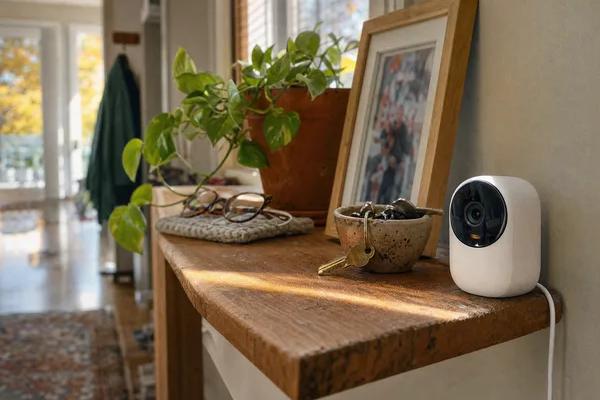
You should not pay a human $50/hour just to be present "in case" something happens. A medical alert system acts as your 24/7 digital safety net. It detects falls and connects to emergency dispatch immediately, allowing you to pay for caregivers only when hands-on tasks (bathing, cooking) are actually required.
Looking for peace of mind without the $40/hour price tag? Shop the Holo Alert Pro.
Public vs. Private: The "Gap" You Pay For
Provincial health authorities provide essential support, but they are not concierges. You may qualify for a few weekly baths or nurse visits, but the government does not cover "companionship" or 24/7 monitoring. This leaves a massive safety gap. If a senior falls during the 20 hours a day a public caregiver isn't there, the free care they received earlier is irrelevant.
Retirement Residence Fees: What You Actually Pay
Retirement homes (distinct from subsidized Long-Term Care nursing homes) are private businesses. Their pricing models are designed to look simple—a bundled monthly fee—but the fine print matters.
The Base Rent vs. The Reality
Across Canada, the base rate generally covers your suite, utilities, and meals. In Ontario, the average hovers around $3,354 per month, spiking to nearly $4,000 in Toronto or Ottawa. In BC, premium residences can easily exceed $9,000 monthly.
However, that fee rarely includes actual health care. If mom needs help putting on compression socks, managing meds, or walking to the dining hall, you pay extra.
The "À-la-Carte" Danger
Retirement homes charge for "care packages." A simple medication administration service can add $500–$800 to your monthly bill. If you need a "safety check" where a staff member pokes their head in the door at night, you pay for it.
The Holo Alert Difference
Many families assume moving to a facility guarantees safety. It doesn't. A resident can fall in their bathroom and wait hours for the next scheduled check. Equipping your loved one with automatic fall detection ensures that even inside a facility, help is summoned the second an incident occurs—often faster than pulling a wall cord.
Comparison: Where is Your Money Actually Going?
| Aspect | Aging in Place | Retirement Home |
|---|---|---|
| Housing Costs | Often lower (mortgage may be paid off), but property taxes and utilities still apply | High monthly rent, usually several thousand dollars per month |
| Meals & Preparation | Food requires independent grocery shopping and meal preparation | Meals and social activities typically included |
| 24/7 Supervision | True 24/7 supervision is typically cost-prohibitive, often reaching tens of thousands per month | Staff present on site, but not in rooms around the clock |
| Emergency Response | Only available if a medical alert system is purchased separately | Emergency pull cords available, but only helpful if someone can reach them |
| Social Connection | Social isolation can become a real risk without intentional effort | Built-in community and activities |
To make an informed choice, it helps to clearly understand how costs and safety features compare. In both scenarios, meaningful safety and emergency protection are often treated as add-ons rather than standard features.
The "Tipping Point": When Home Care Breaks the Bank
There is a mathematical limit to aging in place. Home care is usually the financial winner for seniors with low-to-moderate needs. If you only need someone to help with cleaning and a few baths a week, staying home saves you thousands.
The 8-Hour Rule
Once a senior requires 8 hours of supervision per day, the scales tip. Paying for 8 hours of private care daily (~$240/day) puts your monthly spend over $7,000—well above the cost of most luxury retirement suites.
However, you can delay this tipping point. By using smart technology to handle supervision, you reduce the paid human hours needed. A Holo Alert system doesn't get tired, doesn't charge overtime, and watches over your loved one while you sleep.
Don't wait for a crisis to upgrade your safety. Secure your Holo Alert system today.
Government Subsidies That Lower Your Bill
Never look at the sticker price without factoring in Canadian tax breaks. These can significantly offset the cost of both home care and medical monitoring equipment.
Medical Expense Tax Credit (METC)
The CRA allows you to claim eligible medical expenses to lower your income tax. This is a massive opportunity often missed. You can typically claim:
- Salaries paid to an attendant (with proper receipts).
- Medical Alert Systems: The cost of purchasing and monitoring a Holo Alert system is generally recognized as an eligible medical expense.
- Home renovations for accessibility (ramps, walk-in tubs).
Provincial Subsidies & LTC
If private retirement homes are out of reach, Long-Term Care (LTC) is the government-subsidized alternative. In provinces like Alberta and BC, resident contributions are income-based, often capped between $1,300 and $3,400 monthly. The trade-off? Long waitlists and less choice in location.
Frequently Asked Questions
What is the average cost of home care in Canada?
Private personal support typically runs $37 to $50 per hour. Costs escalate based on location (higher in BC and Ontario) and the level of medical expertise required. 24/7 care can easily exceed $30,000 per month.
Is a retirement home cheaper than home care?
It depends on the "care volume." If a senior needs more than 4 hours of daily assistance, a retirement home (averaging $3,300–$6,000/month) is usually cheaper than paying hourly rates for private caregivers at home.
Are medical alert systems tax deductible in Canada?
Yes, under the Medical Expense Tax Credit (METC), the costs associated with a medical alert system for a patient with a specific impairment are often eligible expenses on your federal tax return.
Do retirement homes include fall detection?
Rarely. Most offer wall-mounted pull cords. If a resident falls in the middle of the room and cannot reach the cord, they remain helpless. Personal wearables with GPS and fall detection are superior for ensuring safety.
What is the "tipping point" for moving out?
Financially, the tipping point occurs when care needs exceed roughly 22 hours per week. At this volume, the cost of private care plus household expenses usually surpasses the all-inclusive fee of a retirement community.
Why Waiting Isn't an Option
The most expensive decision you can make is no decision at all. Waiting for a "sign"—usually a broken hip or a frightening medical emergency—forces you into reactive spending, where you have no time to compare costs or secure funding.
Whether you choose to age in place or move to a community, safety must be the foundation of your plan. You cannot put a price on the speed of emergency response. If you are staying home, you need a guardian. If you are moving, you need a dedicated line to safety that doesn't rely on understaffed facilities.
Take control of your future right now. Equip yourself or your loved one with Canada's most trusted protection. Get Holo Alert today.