Living alone is a triumph of independence, but let's be honest about the reality: it comes with hidden dangers. In Canada, where winter isolation is a fact of life and emergency response times can vary by Province, the home isn't just a sanctuary—it's a potential hazard zone.
The silence of an empty house is peaceful until you need help and can't reach the phone. We aren't here to scare you, but we are here to protect you. Safety isn't about wrapping yourself in bubble wrap; it's about engineering your environment so that a slip doesn't become a statistic.
This guide cuts through the noise to give you the harsh truths and practical solutions for aging in place safely.
Key Takeaways
- The "Long Lie" Risk: The biggest danger isn't just the fall; it's remaining on the floor for hours. Detection speed is everything.
- Bathroom Battleground: Statistically, the bathroom is where your independence is most likely to be compromised. Modify it first.
- Tech Trumps Luck: Voice assistants like Alexa are convenient, but medical alert systems are life-saving necessities.
- The Fear Cycle: Reducing the fear of falling actually decreases the likelihood of falling. Confidence is a safety mechanism.
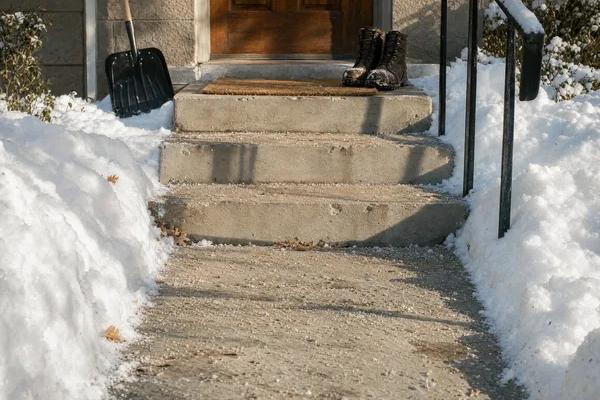
- Winter Readiness: Canadian seniors face unique risks involving ice and isolation that require specific preparation.
The Hidden Cost of "Wait and See"
Many seniors delay safety upgrades because they "feel fine today." This is a dangerous gamble. Canadian data consistently highlights that falls and home hazards are the primary threats to your autonomy. A single incident can shift your trajectory from living independently to requiring long-term care.
The Holo Alert Difference: We often hear from customers after an accident has occurred. By then, the trauma has already happened. Holo Alert is designed to be proactive. Our devices don't just wait for you to press a button; they are a 24/7 lifeline that ensures a minor slip doesn't turn into a hypothermia risk on a cold floor.
Beyond the physical injury, there is the psychological toll. The "fear of falling" causes many older adults to retreat, avoiding stairs or leaving the house entirely. This retreat leads to muscle atrophy and social isolation, which ironically increases the risk of falling.
The Brutal Truth: Assessing Your Risk
You cannot fix what you ignore. You need to conduct a forensic audit of your home. Start with the floors. Throw rugs are not decor; they are trip hazards. In Canada, where we track in snow and salt, these rugs become slippery traps. Remove them or tape them down aggressively.
Next, audit your lighting. Shadows mask obstacles. As we age, our eyes need significantly more lumens to register depth. If you are walking down a dim hallway to the bathroom at night, you are walking blind.
Check your accessibility: do you need a step stool to reach your medication? If so, you are creating an unnecessary fall risk every single day.
The Holo Alert Difference: You can clear every rug and install every light, but you cannot eliminate fainting spells or sudden medical events. That is why a physical environment audit is only half the battle. You need a safety net that follows you even when you are standing still.
Essential Home Modifications (No Half-Measures)
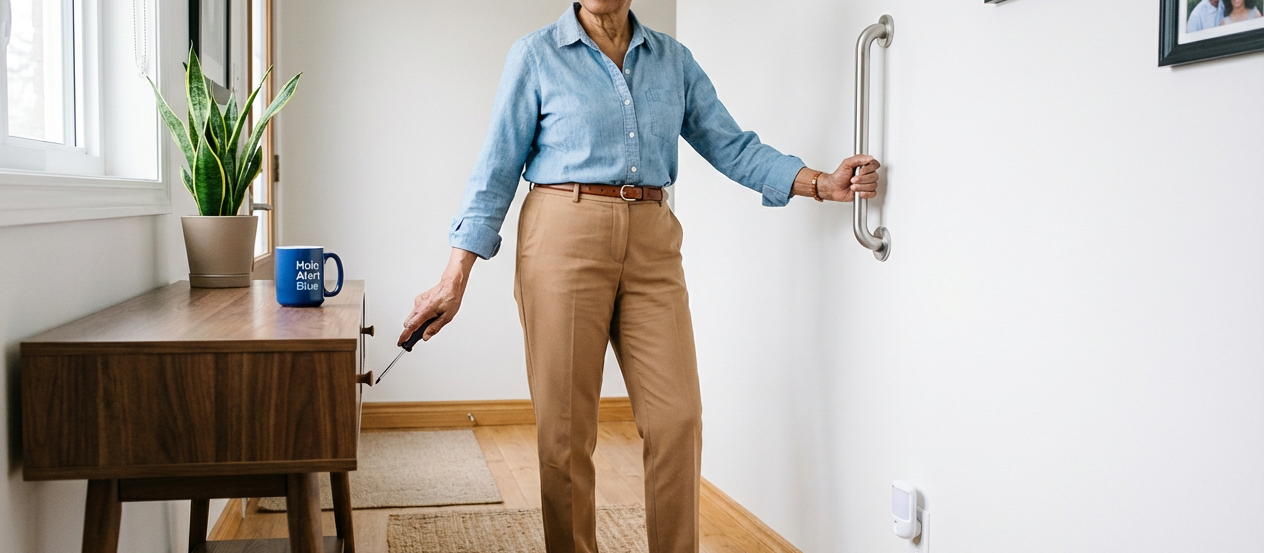
When modifying your home, prioritize functionality over aesthetics. The bathroom is ground zero for injuries. Installing grab bars isn't "hospitalizing" your home; it's fortifying it. Use non-slip Luxury Vinyl Tile (LVT) rather than slippery ceramic. Widening doorways to 32–36 inches costs money (between $625 and $1,900), but it is cheaper than a month in a rehabilitation centre.
Smart vs. Passive Safety Comparison
| Aspect | Passive Safety | Active Safety (Smart Fall Detection) |
|---|---|---|
| Coverage | Single room or installation point | Throughout the home and outside with GPS support |
| How it Works | Must reach the device before a fall | Responds automatically when a fall is detected |
| Medical Emergency Response | ❌ No assistance for heart attacks or strokes | ✅ Can respond to any medical emergency |
| Accessibility | Only helpful if reachable | Works even if wearer is unconscious |
| Confidence Level | Limited peace of mind | ✅ Higher confidence knowing help is always available at a button press or automatically |
Looking for peace of mind that follows you everywhere? Shop the Holo Alert Pro.
Technology: Why "Smart Speakers" Aren't Enough
We see many guides suggesting Amazon Alexa or Google Home as safety devices. While useful for turning on lights, they are not medical safety devices. If the power goes out (common during Canadian winter storms), your WiFi goes down, and your smart speaker dies. If you fall in the bathroom with the door closed, Alexa cannot hear you scream.
The Holo Alert Difference: Our systems run on independent cellular networks with extended battery backups. We don't rely on your home WiFi or electricity. When we discuss waterproof medical alert systems, we mean devices that go into the shower with you—the places where smart speakers can't go.
For Canadian seniors, GPS capability is also non-negotiable. If you wander or slip on an icy sidewalk while getting the mail, a home-bound system won't help you. Holo Alert tracks your location to send EMS exactly where you are, not just to your billing address.
Routines and "Lazy Susan" Logic
Hardware is essential, but behavior saves lives. Establish a "Lazy Susan" approach to your cabinetry: keep heavy dishes, clothes, and cleaning supplies between waist and shoulder height. Reaching high or bending low throws off your center of gravity.
Medication safety is equally critical. Use automated reminders, but back them up. Medication errors lead to dizziness, which leads to falls. This is a cyclical problem that requires a strict routine.
Emergency Planning: The "Breach" Protocol
If you press your button and EMS arrives, can they get in? If your door is locked, paramedics will use a "halligan bar" or battering ram to destroy your door frame to reach you. This causes thousands of dollars in damage and delays care.
The Holo Alert Difference: We recommend and supply secure lockboxes. You store a spare key inside, and we provide the code to EMS dispatchers the moment we send them to your home. They gain entry in seconds without destruction.
Don't leave your safety to chance or weak WiFi. Secure your Holo Alert system today.
Your 24-Hour Action Checklist
Do not wait for a "better time" to start. Do these three things immediately:
- The Rug Purge: Roll up every throw rug in your hallway and bathroom today.
- The Bulb Swap: Replace hallway bulbs with motion-sensing LED bulbs ($25) immediately.
- The Lifeline: Order a monitored medical alert system. If you are reading this, you are already considering it. Do it before the fall happens.
Frequently Asked Questions
What makes a medical alert superior to a cell phone for safety?
Cell phones are often left on tables or chargers. During a fall, they are rarely within reach. Furthermore, unlocking a phone and dialing 9-1-1 takes fine motor skills you may not have during a medical crisis. A dedicated system like Holo Alert is wearable, waterproof, and requires a single button press—or no press at all with fall detection.
How do I access government support for these modifications?
Canada has specific programs to assist seniors. You should investigate the Age Well at Home Initiative and various provincial tax credits for home accessibility (like the Home Accessibility Tax Credit). These can help offset costs for ramps and safety device installation.
Will a medical alert system work if I am in the garden or down the street?
A traditional landline system will not. However, mobile GPS systems like the Holo Alert Pro are designed specifically for this. They use cellular networks to protect you anywhere in Canada where there is cell coverage, ensuring you aren't a prisoner in your own home.
How does fall detection actually work?
Smart fall detection uses accelerometers and gyroscopes to detect the specific velocity and angle of a sudden drop, followed by a lack of movement. If the device senses this pattern, it connects to the monitoring centre automatically, even if you are unconscious.
Independence Requires Action
Hope is not a strategy. Living alone in your later years is a privilege that must be defended with the right tools and the right mindset. By fortifying your home and equipping yourself with professional monitoring, you aren't surrendering to aging—you are mastering it.
Don't wait for a warning sign. Make your home your fortress today.