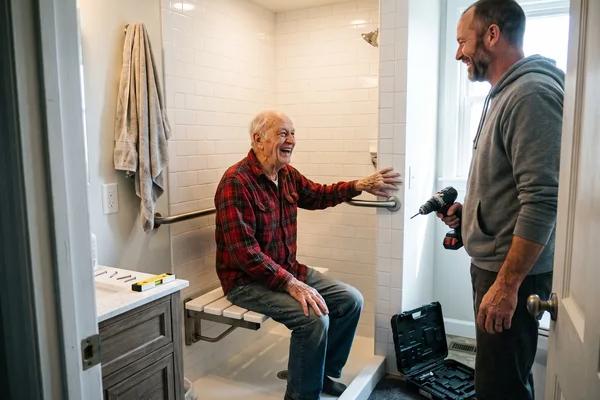
Aging in place isn't free. While the emotional benefits of staying in your own home are priceless, the financial reality is often harsh. From dental bills to mobility aids, the costs pile up, forcing many Ontario seniors to make dangerous trade-offs between their bank balance and their physical safety.
The provincial government knows that keeping you at home is cheaper than long-term care, which is why they introduced the Ontario Seniors Care at Home Tax Credit. This isn't just a standard deduction; it is a refundable tax credit. That means if you are eligible, the government puts actual cash back into your pocket—cash that can be reinvested into critical safety measures.
Too many seniors leave this money on the table simply because the tax code is confusing. We are cutting through the bureaucratic noise. Below is exactly how to claim what you are owed, maximize your return, and ensure you have the funds necessary to protect your independence.
Key Takeaways
- It's Cash Back: This is a refundable credit. You can receive a refund even if you owe zero income tax.
- Target Audience: Designed for seniors aged 70+ with low-to-moderate family net incomes.
- Stackable Savings: You can claim the same expenses for this credit and the Federal Medical Expense Tax Credit.
- Broad Eligibility: Covers hearing aids, walking aids, attendant care, and more.
- Income Tested: Families earning under $35,000 see the maximum benefit; it phases out completely around $65,000.
Understanding the Financial Lifeline
The Ontario Seniors Care at Home Tax Credit is a targeted financial weapon against the rising cost of living. Unlike non-refundable credits that merely reduce your tax bill, this initiative acknowledges that medical expenses are mandatory, not optional. If your calculated credit exceeds your tax liability, the province pays you the difference.
The Holo Alert Reality Check: Financial stress is a leading cause of seniors skipping necessary safety upgrades. While this tax credit helps reimburse you for care you have already paid for, Holo Alert provides the immediate, 24/7 protection that money can't buy after an accident happens. Use these government refunds to fortify your safety net, not just pay off old bills.
Who Qualifies? (Don't Assume You Don't)
Eligibility is strict but fair. The government wants this money to go to those who are most vulnerable to being forced out of their homes due to cost.
Age and Residency
You must be a resident of Ontario at the end of the tax year and turn 70 years of age or older by December 31. If you have a spouse or common-law partner who meets this age requirement, you may still be eligible to claim on their behalf.
Income Thresholds
The benefit is income-tested based on family net income:
- Full Benefit: Families with a net income of $35,000 or less generally claim the full amount.
- Partial Benefit: The credit reduces gradually as income rises above $35,000.
- No Benefit: The credit is fully phased out around $65,000 (verify with current tax year adjustments).
Qualifying Medical Expenses
Generally, if an expense qualifies for the federal Medical Expense Tax Credit (METC), it qualifies here. These expenses must be paid within a 12-month period ending in the tax year.
Attendant Care
This includes wages paid to professional caregivers for assistance with bathing, meals, or medication. It also covers a portion of fees paid to retirement homes for staff salaries.
The Care Gap: An attendant cannot be with you every second of the day. A caregiver goes home at 5 PM; Smart Fall Detection does not. Using your tax refund to cover the gaps in human attendant care is the smartest way to ensure total coverage.
Mobility and Safety Aids
Equipment required to navigate your home safely is covered. This includes:
- Wheelchairs and Scooters: Purchase or rental costs.
- Walking Aids: Walkers, canes, and crutches.
- Bathroom Aids: Devices prescribed by a medical practitioner.
Sensory and Daily Living Supports
As vision and hearing decline, the risk of isolation increases. The credit covers:
- Hearing Aids: Including batteries and repairs.
- Vision Care: Eyeglasses, contacts, and laser surgery.
- Dental Care: Dentures and implants.
Calculating Your Refund
Do not let the math scare you. The calculation is straightforward: The credit is 25% of your claimable medical expenses, up to a maximum expense limit of $6,000. This means the maximum annual cash refund is $1,500 ($6,000 x 25%).
- Total Your Expenses: Sum up all eligible costs.
- Apply the Cap: You can only use up to $6,000 of expenses.
- Calculate Base Credit: Multiply by 25%.
- Apply Reduction: If family net income is over $35,000, reduce the credit by 5% of the excess income.
Home Safety Tax Credit vs. Care at Home Tax Credit
Confusion here costs seniors money. The "Home Safety" credit was for renovations. The "Care at Home" credit is for medical needs. You need to know the difference to claim the right one.
| Feature | Care at Home Tax Credit | Home Safety Tax Credit |
|---|---|---|
| Focus | ✅ Medical & Care Expenses | ✅ Renovations (Ramps, Grab Bars) |
| Refundable? | ✅ Yes | ✅ Yes |
| Key Examples | ✅ Hearing aids, Nursing care | ✅ Stair lifts, Walk-in tubs |
| Income Limit | ⚠️ Yes (Reduces as income rises) | ✅ No (Available to all incomes) |
| Max Credit | ⚠️ $1,500 max refund | ✅ $2,500 max refund |
Stacking Your Benefits
The Ontario Seniors Care at Home Tax Credit is designed to work in tandem with other programs. You do not have to choose one or the other.
Federal Medical Expense Tax Credit (METC)
You can claim the same expenses for both the provincial refundable credit and the federal non-refundable METC. This "double-dip" significantly increases the ROI on health investments.
Note that in Canada, Medical Alert Systems are often eligible for the Federal METC if prescribed by a doctor, further lowering the effective cost of protecting your life.
Ontario Energy and Property Tax Credit (OEPTC)
While the Care at Home credit handles medical bills, the OEPTC assists with property tax and energy costs. If you are paying for accommodation in a long-term care home, ensure you apply for this as well.
How to Claim the Credit
There is no separate application form to mail in. You claim this when you file your T1 General Income Tax and Benefit Return.
- Form: Complete Schedule ON479 (Ontario Credits).
- Receipts: Keep them. The CRA does not need them mailed, but if they audit you (which is common for medical claims), you must produce receipts showing the date, payee, and purpose.
- Prescriptions: Keep prescriptions for any equipment claimed, such as hospital beds.
Frequently Asked Questions
Can I claim this credit if I live in a retirement home?
Yes. However, you cannot claim your entire rent. You can only claim the portion of fees specifically designated for attendant care (staff salaries/wages). Ask your administrator for a breakdown letter.
Do I have to live in my own house to qualify?
No. "Care at Home" implies living in the community rather than a hospital or long-term care facility. Renters, homeowners, and retirement residence tenants are all eligible if they meet age/residency rules.
Is the credit available to couples?
Yes. Couples can combine medical expenses. Since the credit is based on family net income, it avoids the complexity of deciding who should claim it, unlike the federal non-refundable credit.
What if my income is too high?
If your family net income exceeds ~$65,000, this specific credit reduces to zero. However, you should still claim the federal and provincial non-refundable medical expense credits to reduce your tax payable.
Invest in Peace of Mind Today
Tax credits are a powerful tool, but they are reactive—they pay you back after the money is spent. Your safety requires a proactive approach. The government provides these financial incentives because they know that seniors who stay safe at home live longer, happier lives.
Do not wait for the tax return to arrive before you secure your home. Use the knowledge that reimbursement is coming to invest in the protection you need right now. Whether it is attendant care or learning what to do after a fall, preparation is key.
Take control of your safety and your budget. Get protected with Holo Alert now.