Safe Pet Ownership for Seniors: How to Protect Your Companion (And Yourself)
Let's be honest about the reality of aging with a pet. While your dog or cat provides immense comfort and a reason to get out of bed, they also represent a statistically significant hazard to your independence. A single trip over a sleeping cat or a sudden leash pull on an icy Canadian sidewalk can result in a hip fracture that ends your ability to live at home.
This isn't about giving up your companion; it is about acknowledging the risks so you can manage them. Safe pet ownership for seniors requires more than love—it requires a tactical approach to fall prevention, financial planning, and emergency response. If you are not prepared for the physical demands of pet care, you are gambling with your mobility. Here is how to keep your pet without sacrificing your safety.
Key Takeaways
- The Fall Risk is Real: Pet-related tripping hazards are a leading cause of preventable home injuries for Canadian seniors.
- Winter is the Enemy: Walking dogs on icy sidewalks requires specific traction gear and GPS safety monitoring.
- Choose Wisely: High-energy breeds are a liability; low-maintenance seniors or cats are safer bets for aging in place.
- Financial Reality: Fixed incomes must account for rising veterinary costs to avoid compromising your own care.
- Automated Protection: Fall detection technology is the only reliable backup when a pet accident prevents you from reaching a phone.
The Double-Edged Sword: Companionship vs. Physical Risk
Owning a pet later in life is a trade-off. On one side, you have the proven reduction in loneliness and the cardiovascular benefits of routine movement. On the other, you have a physical liability living in your hallway. Emergency department data consistently highlights thousands of fractures annually related specifically to dog walking. For an older adult, a fall is not just a bruise; it is often the beginning of a decline that leads to long-term care facilities.
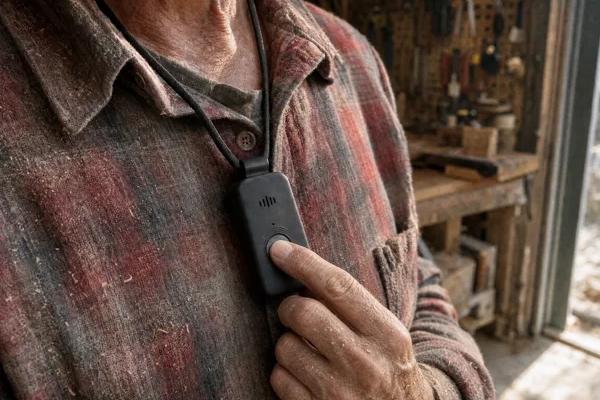
When a pet trips you, it usually happens fast, and often away from a landline phone. If you break a hip in the kitchen because of a rushing dog, you cannot crawl to help. Holo Alert closes this gap with automatic fall detection. We don't just wait for you to press a button; if the device senses a hard fall, it calls for help automatically, ensuring you aren't left stranded on your own floor.
You must also consider the practical restrictions. While pets provide purpose, they can anchor you to the home, making travel or spontaneous medical visits difficult. In Canada, finding pet-friendly housing in retirement communities or rentals is increasingly competitive. You need to balance the emotional reward with the hard logistical truths of your living situation.
Looking for peace of mind while walking your dog? Shop the Holo Alert Pro.
Assessing Readiness: The Hard Questions
Before adopting or deciding to keep a pet while aging in place, you must strip away the sentimentality and assess your capabilities objectively.
Physical Readiness
Can you lift a 15kg bag of kibble? Can you bend to scoop a litter box without losing your balance? If you have mobility limitations, a high-energy dog that pulls on the leash is not a companion; it is a severe fall risk. You must be honest about your strength and endurance.
Cognitive Readiness
Pets require rigid schedules for feeding, medication, and grooming. If you are managing your own complex medication routine, adding a pet's medical needs can lead to errors. Cognitive changes can lead to unintentional neglect of the animal or the home environment, creating sanitation hazards.
Financial Readiness
Veterinary costs in Canada are rising. Emergency care for a pet can cost thousands of dollars instantly. If you are on a fixed income, does a $2,000 vet bill mean you stop buying your own prescriptions? If the answer is yes, you are not financially ready. While some humane societies offer low-cost clinics, relying on them is a risky strategy.
Choosing the Right Pet: A Risk Analysis
Success in safe pet ownership often comes down to risk management regarding the breed and age of the animal. Puppies are chaos agents; they are rarely suitable for seniors with balance issues. Low-maintenance options are safer.
| Pet Type | Safety Profile | Risk Factors |
|---|---|---|
| Senior Dog | ✅ Calm temperament, house-trained, lower exercise needs. | ⚠️ Higher potential for veterinary costs and health issues. |
| Adult Cat | ✅ Independent, strictly indoors (no ice risks), affectionate. | ⚠️ Litter box scooping requires bending; tripping hazard at night. |
| Puppy / Active Breed | ❌ High engagement and fun. | ❌ Severe fall risk due to pulling, jumping, and training demands. |
When adopting, look for "seniors for seniors" programs at organizations like the BC SPCA or Toronto Humane Society. Demand the medical and behavioural history. A dog with a history of bolting is a threat to your safety.
Outdoor Safety: Surviving Canadian Winters
Walking a dog is excellent exercise, but in Canada, it is also an extreme sport during winter. To ensure safe walking habits, you must adapt your gear.
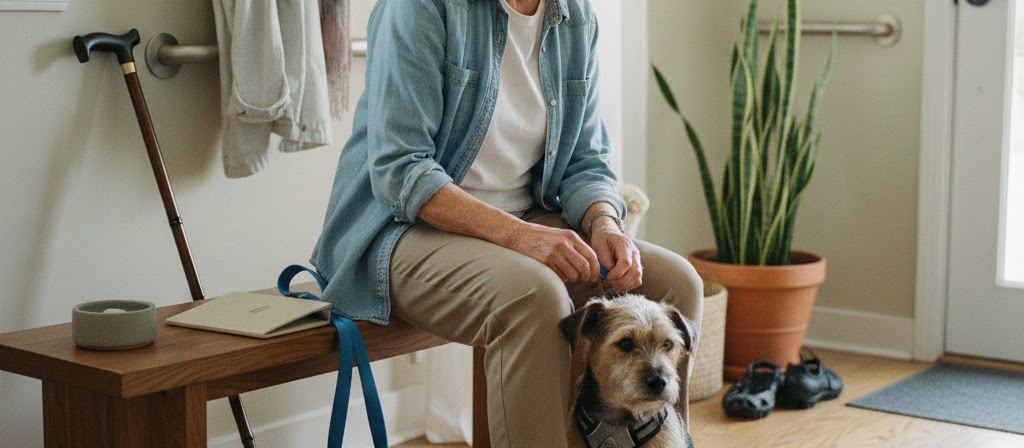
Footwear is non-negotiable. You need boots with aggressive treads or add-on ice cleats. A smooth sole on a snowy sidewalk while holding a leash is a recipe for disaster. Furthermore, use a no-pull harness rather than a collar. A harness distributes the force if the dog lunges, whereas a collar pull can jerk your upper body and throw off your center of gravity.
Even with the best boots, black ice is invisible. If you slip on a trail or a quiet sidewalk, passersby may not see you immediately. The Holo Alert system includes GPS tracking technology. This means emergency responders are sent to your exact geographical location, not just your home address. Standard landline buttons are useless the moment you step out your front door.
In-Home Modifications for Fall Prevention
Your home must be fortified against tripping. Pets are erratic; they lie in doorways and weave between legs.
- Lighting: Install motion-sensor nightlights. Stepping on a dark cat in a dark hallway is a common cause of falls.
- Secure Rugs: A running pet will bunch up a throw rug instantly. Tape them down or remove them entirely.
- Elevate: Use elevated feeders so you don't have to stoop, and use long-handled litter scoops to protect your back.
Don't wait for a fall to prove you need protection. Secure your independence with Holo Alert today.
Why Generic Alerts Fail Pet Owners
For seniors living alone with a pet, a medical alert system is not a luxury; it is a necessity. However, generic systems often lack the sophistication required for active pet owners. Holo Alert is built for the "what if." What if you are unconscious? What if you are at the dog park?
Our devices are monitored 24/7 by Canadian specialists. Furthermore, we integrate your pet into your care plan. You can update your profile to inform responders that there is a dog in the house that needs securing, ensuring that EMS enters safely and your pet is not lost in the chaos of an emergency.
Emergency Planning: Who Feeds the Dog If You Can't?
If you are hospitalized tonight, do you have a plan? Relying on a vague verbal agreement with a neighbor is insufficient. You need a Pet Emergency File clearly visible on your fridge. This file must include vaccination records, medication lists, and the contact info for a designated caregiver who already has a key to your home.
Without this, your pet could end up in animal control custody while you are recovering. Responsible ownership means preparing for the worst-case scenario so your companion is never left vulnerable.
Frequently Asked Questions
How can seniors with limited mobility manage pet waste safely?
Do not risk your balance by deep bending. Use long-handled poop scoopers and extended litter scoops. If mobility is severely restricted, you must budget for a service or a neighborhood volunteer to handle waste removal. It is not worth a fall.
Is dog walking actually safe for the elderly?
It is beneficial but carries high risk. To make it safe, avoid peak hours when other dogs might excite yours, stick to flat, cleared paths, and always wear traction aids in winter. Never wrap the leash around your wrist/hand, as this can result in wrist fractures or being dragged.
Does Holo Alert work if I fall while walking my dog in the park?
Yes. Unlike traditional home-bound systems, Holo Alert utilizes cellular networks and GPS. Wherever you have cell service, you have protection. If you fall on a trail, we can pinpoint your location and send help directly to you.
What are the best dog breeds for seniors?
Avoid working breeds (Shepherds, Huskies) and terriers with high prey drives. The safest bets are generally companion breeds like Cavalier King Charles Spaniels, Shih Tzus, or Pugs, and specifically senior dogs over the age of 7 who have outgrown their destructive puppy energy.
Don't Let Fear Dictate Your Lifestyle
You shouldn't have to choose between your safety and your best friend. You simply need to arm yourself with the right tools. By modifying your home, choosing the right animal, and wearing a Holo Alert device, you build a safety net that protects both you and your pet. A fall can happen in a split second, but with the right preparation, it doesn't have to cost you your independence.