The "Danger Zone" of Hip Replacement: Your Essential Home Safety Guide
The surgery is the easy part. The real challenge begins the moment you step through your front door. For Canadian seniors, a hip replacement is a ticket back to mobility and a life without chronic pain. But the journey doesn't end in the operating room.
In fact, the first few weeks at home are the most critical—and dangerous—phase of your recovery. With modern protocols discharging patients within two to three days, your living room becomes your rehab centre. If that room isn't ready, you are walking into a minefield.
The risk of a fall during this period is not just a statistic; it is a direct threat to your new joint and your independence. Preparing your home isn't about interior design; it's about survival. You need to strip away hazards and install safeguards immediately.
Here is how to fortify your home for a safe, successful recovery.
Key Takeaways
- Establish a Ground-Floor Base: Eliminate the need for stairs immediately. Set up a "Recovery Zone" with a high, firm chair and every essential within arm's reach.
- Clear the Runways: Loose rugs and clutter are enemies of your walker. Remove them to create wide, unobstructed paths.
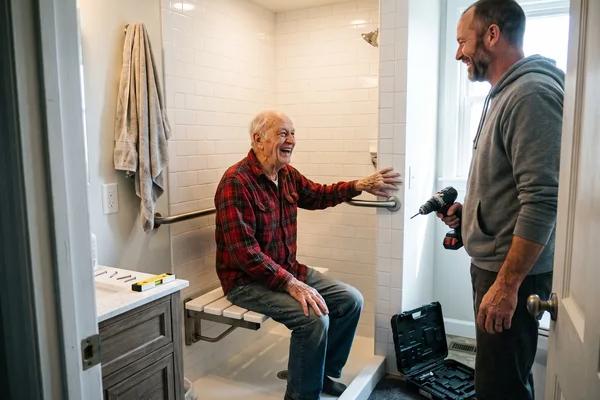
- Fortify the Bathroom: This is the most dangerous room in the house. Install raised toilet seats and non-suction grab bars before discharge.
- Secure Your Lifeline: You will be vulnerable. Ensure you have immediate access to help—like a medical alert system—because you cannot run to a phone if you fall.
Preparing for Discharge: The "No-Fall" Zone
The transition from hospital care to home independence must be seamless. You need to view your home through the lens of limited mobility. Your balance will be compromised, your reaction times slower, and you will be tethered to a walker or crutches.
Start at your front door and clear a wide path to your bedroom, bathroom, and kitchen. Do not negotiate with clutter. Relocate unstable furniture, tape down electrical cords, and roll up every loose rug. If your walker snags on a carpet edge, you go down.
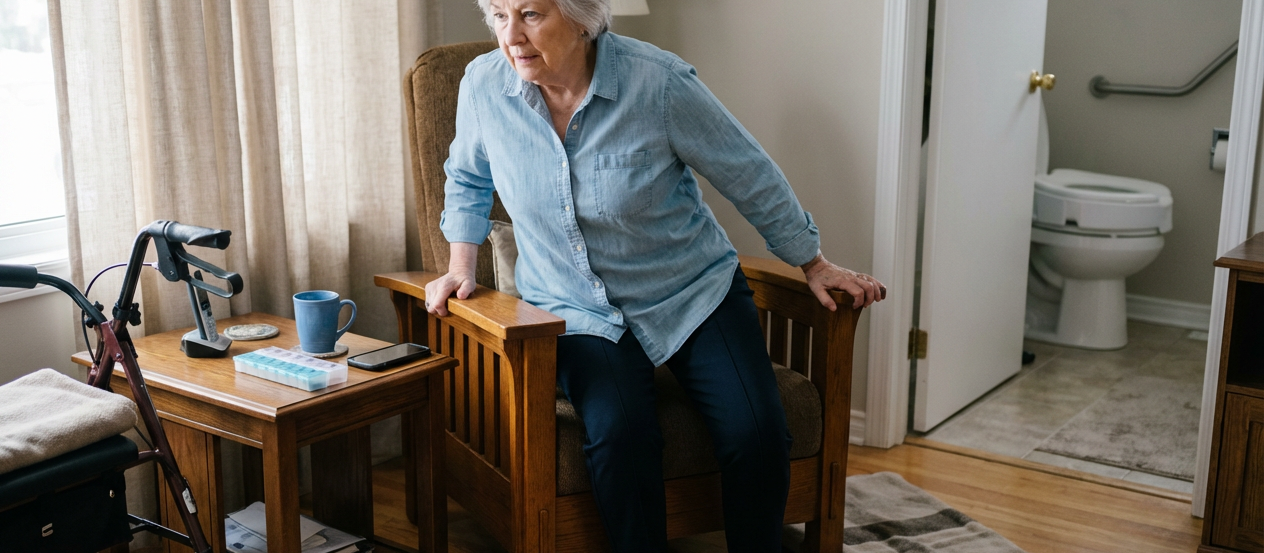
We strongly advise establishing your "recovery zone" on the main floor. Climbing stairs in the first week is an unnecessary risk. In this zone, place a firm chair with armrests (to help you push up) and a side table stocked with water, medications, and your phone.
However, remember that a phone on a table is useless if you fall five feet away from it. This is where the Holo Alert difference matters. While a cell phone requires you to be conscious, within reach, and able to dial, a wearable medical alert system ensures help is just a button press away, no matter where you are in the house.
Room-by-Room Hazard Elimination
Every room presents a unique threat to your new hip. You must address these hazards proactively.
The Bedroom
Your bed height is critical. When sitting on the edge, your knees must be lower than your hips to adhere to hip precautions. If the bed is too low, you risk dislocation trying to stand up.
Install motion-activated night lights from your bed to the bathroom. Fumbling in the dark is a recipe for a fall.
The Bathroom
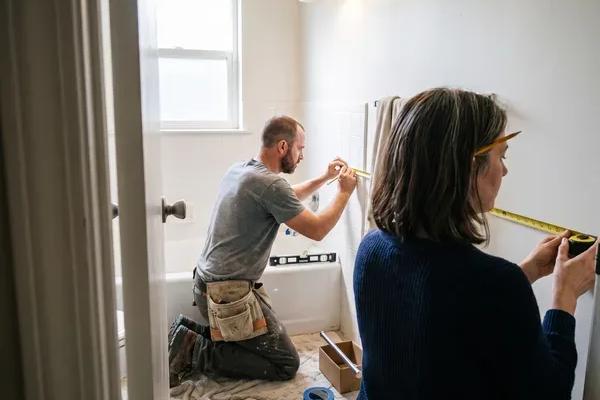
This is the deadliest room in your home. Water, tile, and balance issues are a catastrophic combination. Do not rely on towel racks for support; they will rip out of the wall. Install professional-grade grab bars.
- Toilet: Use a raised seat. Squatting too low violates the 90-degree hip rule.
- Shower: Use a transfer bench or shower chair. Do not attempt to stand for a full shower in the first weeks.
Looking for peace of mind? Shop the Holo Alert Pro.
The Kitchen
Stop bending and reaching. Move your daily dishes, coffee mug, and dry goods to waist-height counters. If you have to use a step stool or bend to the bottom shelf, you have failed to prepare safely. Heavy items like milk should be moved to smaller containers to avoid strain.
Why Standard Preparation Isn't Enough
A Holo Alert protected home provides a far higher level of safety during recovery than a standard home setup. With automatic fall detection, help is called even if the individual cannot speak or reach a phone, whereas standard recovery often depends on locating and dialing a phone during an emergency.
Bathroom safety is significantly improved with a fully waterproof pendant that can be worn in the shower, compared to phones that are usually left on a counter and may be unreachable or damaged by water.
Around-the-clock monitoring by live Canadian agents ensures emergency medical services can be dispatched immediately, instead of relying on neighbours or family members who may miss a call or be unavailable when help is needed most.
Mobility Aids: Your Tools for Independence
Mobility aids are non-negotiable. You will likely start with a standard walker for stability and graduate to a cane or crutches. These are not signs of weakness; they are tools that protect your surgical investment.
In the bathroom, a raised toilet seat and handheld shower head are mandatory. For dressing, you need a "hip kit"—a long-handled reacher, shoehorn, and sock aid. These tools allow you to dress without breaking the 90-degree flexion rule.
Financial Aid Note: In Canada, costs for these devices may be offset by provincial programs like the Ontario Assistive Devices Program (ADP) or through Red Cross loan programs. Do not let cost jeopardize your safety.
Daily Activities: Moving with Purpose
Returning to daily life requires relearning how to move. One wrong twist can lead to dislocation.
Dressing
Sit down. Dress your operated leg first and undress it last. This minimizes manipulation of the healing joint. Use your reacher.
Bathing
Sit on your shower chair. Use a long-handled sponge. Keep the incision dry until your surgeon clears you. If you feel dizzy, stop immediately.
Toileting
Back up until you feel the raised seat against your legs. Slide your operated leg out, reach back for the rails, and lower yourself slowly. Never "plop" down.
Fall Prevention: The Ultimate Priority
Falls account for over 50% of injury-related hospital admissions among Canadian seniors. A fall after a hip replacement can shatter the bone around the implant, requiring complex revision surgery. You must take aggressive preventative measures.
Lighting and Footwear
Banish shadows. Ensure hallways are brightly lit. Wear closed-heel, non-slip shoes inside. Socks on hardwood floors are essentially ice skates—avoid them.
The Technology Gap
Physical modifications are essential, but they don't catch you if you fall. Smart fall detection technology bridges the gap between an accident and a tragedy. If you slip in the bathroom or faint in the kitchen, Holo Alert senses the impact and connects you to a live operator immediately, even if you are unconscious.
Secure your recovery today. Get protected with Holo Alert.
Red Flags: When to Call for Help
You are your own best advocate. If something feels wrong, it likely is. Contact your surgeon immediately if you see signs of infection (redness, oozing, fever) or if pain becomes unmanageable.
Call 911 immediately for chest pain or shortness of breath (signs of pulmonary embolism), or if your leg appears shortened or turned outward (signs of dislocation).
Frequently Asked Questions
How do I prepare my home before coming home after hip replacement?
Clear all walkways of loose rugs and cords. Set up a "recovery zone" on the main floor to avoid stairs. Place daily items at waist height and install a raised toilet seat and grab bars in the bathroom.
What safety equipment is essential for recovering from hip replacement at home?
You need a walker, a raised toilet seat, a shower chair, and a "hip kit" (reacher, sock aid). We also strongly recommend a waterproof medical alert system for bathroom safety.
What are the most important post-surgery safety tips for seniors?
Strictly follow hip precautions (no bending past 90 degrees). Prevent falls by using non-slip footwear and proper lighting. Never stop using your walker until your physiotherapist clears you.
Can a senior live alone after hip replacement?
Yes, but it requires preparation. You must have a stocked recovery zone, arranged meal delivery, and a medical alert system to call for help in an emergency. If you have a high fall risk, temporary live-in support is advised.
When should I contact my surgeon or go to the emergency department?
Call your surgeon for infection signs or uncontrolled pain. Call 911 for chest pain, shortness of breath, or sudden severe hip pain that suggests dislocation.
Don't Let a Fall Derail Your Recovery
You have undergone major surgery to improve your quality of life. Do not let a preventable fall at home steal that future from you. By preparing your environment and equipping yourself with the right support, you are taking control of your recovery.
A clear floor, a raised seat, and the protection of Holo Alert aren't just "nice to haves"—they are the armor you need to heal safely. Make the decision to protect yourself today.