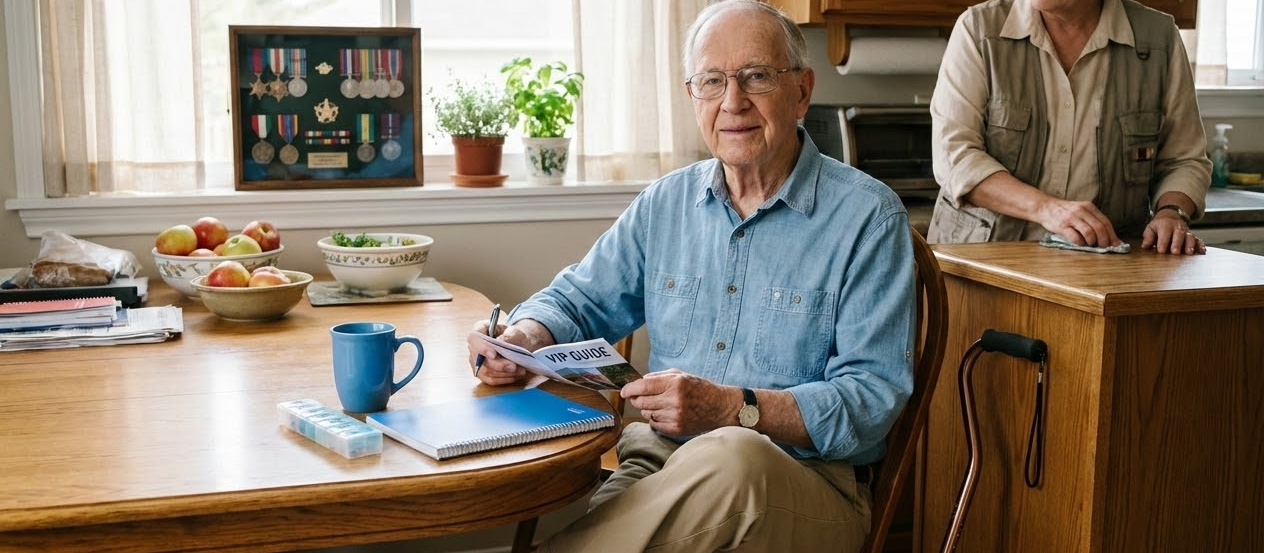
The battle isn't over just because you've hung up the uniform. For thousands of Canadian veterans, the new enemy is the silent, creeping risk of aging at home—falls, sudden medical emergencies, and isolation. While the desire to remain independent is non-negotiable, the reality is that your home can become a danger zone without the right support.
The Veterans Independence Program (VIP), administered by Veterans Affairs Canada (VAC), is your defensive line. It isn't just a financial benefit; it is a tactical resource designed to keep you out of long-term care facilities and where you belong: in your own community. However, navigating federal bureaucracy can be as daunting as the physical risks you face.
This guide cuts through the red tape. We will break down exactly how the VIP works, who qualifies, and how to combine these benefits with modern safety solutions like Holo Alert to ensure you aren't just aging at home, but surviving and thriving there.
Key Takeaways
- Goal of Independence: The VIP provides critical funding to keep veterans in their own homes, delaying or preventing the need for long-term institutional care.
- Gap-Filling Strategy: This program covers what provincial healthcare misses—specifically grounds maintenance, housekeeping, and personal support.
- Broad Eligibility: Coverage extends to war service veterans, Canadian Forces members, RCMP, and in specific cases, surviving spouses and primary caregivers.
- Safety First: Services are not luxuries; they are safety necessities, including snow removal to prevent slips and nutrition support to maintain health.
- Assessment Driven: Access is not automatic; it requires a demonstrated "qualified health need" that compromises your self-sufficiency.
The Mission: Understanding the VIP's Core Purpose
The Veterans Independence Program exists for one reason: to mitigate the risks that force veterans out of their homes. Provincial healthcare in Canada handles doctors and hospitals, but it abandons you at your front door. It won't shovel your driveway after an ice storm, and it won't help you scrub the bathtub—two common scenarios where catastrophic falls occur.
The VIP fills these dangerous gaps. By covering the costs of housekeeping and grounds maintenance, the program removes the physical burden of homeownership that often leads to injury. It provides personal care support for bathing and dressing, ensuring dignity and hygiene are maintained.
The Holo Alert Difference
While the VIP sends someone to mow your lawn or clean your floors, these workers are not there 24/7. If you suffer a fall between visits, a clean floor won't help you. This is why smart veterans pair their VIP benefits with smart fall detection technology. The VIP handles the chores; Holo Alert handles the emergency response.
Looking for total peace of mind? Shop the Holo Alert Pro.
Eligibility: Who Can Access These Benefits?
Do not assume you are ineligible. The criteria are broader than many realize, but they are strict regarding "qualified health needs."
Eligibility generally includes:
- War Service Veterans: Specifically, Second World War veterans with eligible service.
- Canadian Forces & RCMP: Current and former members.
- Civilians: Those who served in specific support roles during wartime.
- Survivors: Primary caregivers and surviving spouses, acknowledging that the burden of service is shared by the family.
However, service history is only half the battle. You must prove that your ability to remain independent is compromised. This means undergoing an assessment to demonstrate that without these services, your health and safety are at risk.
Provincial Coverage vs. VIP Coverage
Many veterans are understandably uncertain about where provincial healthcare support ends and where the Veterans Independence Program (VIP) begins. In practice, provincial healthcare primarily covers medical services such as doctor and hospital visits, while VIP generally only steps in for these services if they are not already covered by the province.
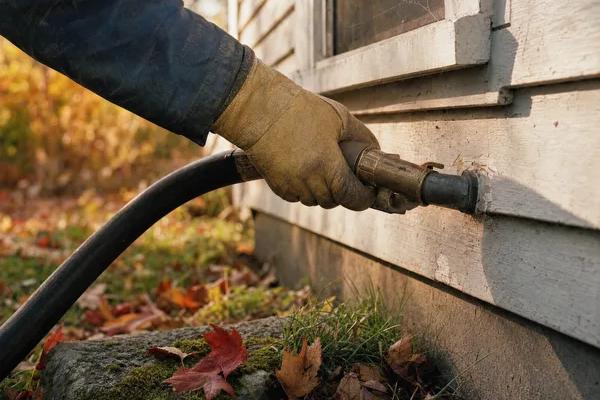
However, a significant gap emerges when it comes to everyday safety and support at home. Essential services like snow removal and lawn care—both of which carry a high risk of injury—are not covered by provincial healthcare but are included under VIP as a safety priority. The same is true for housekeeping and cleaning, which provinces do not cover but VIP does, recognizing their role in preventing accidents. Emergency monitoring, such as medical alert systems, is another critical area where provincial healthcare offers no coverage, while VIP provides support to help veterans remain safe and independent at home.
Critical Services Covered: Protecting Your Home Front
The VIP divides its support into categories designed to eliminate daily hazards. Understanding these categories allows you to advocate for the specific support you need during your assessment.
1. Grounds Maintenance
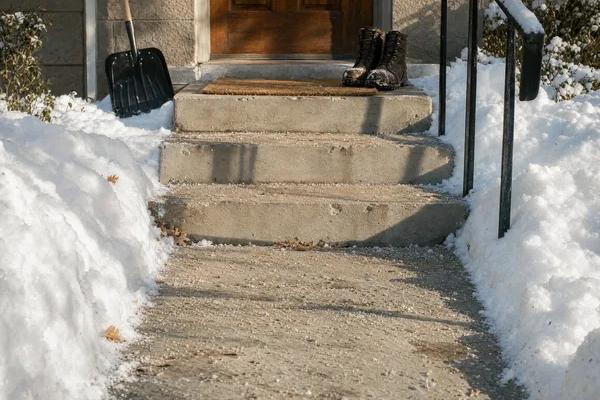
In Canada, winter is a threat. Uncleared ice and snow prevent emergency services from reaching you and increase your risk of a slip-and-fall accident. The VIP covers snow removal and lawn care, not for aesthetics, but for access and safety.
2. Personal Care
This covers non-professional assistance with daily routines like bathing and dressing. The Risk: The bathroom is the most dangerous room in the house. The Solution: VIP funds a worker to assist you. However, you are most vulnerable when that worker leaves. We strongly recommend pairing this service with a waterproof medical alert system that functions in the shower, ensuring you are never truly alone.
3. Housekeeping
Vacuuming, laundry, and meal prep are physically taxing. VIP covers these to prevent strain and fatigue. It can even cover heavy cleaning (washing walls/windows) if leaving them undone poses a health risk.
4. Home Adaptations and Health Support
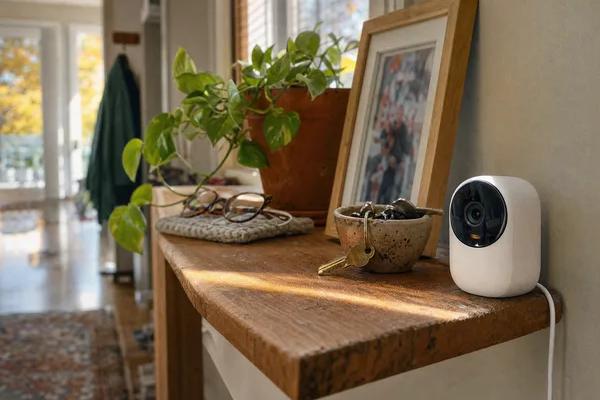
To facilitate aging in place, VIP covers essential modifications like grab bars or ramps. Crucially, this category can also cover medical alert systems. If an assessment deems that safety monitoring is necessary for your survival at home, systems like Holo Alert can be covered.
Don't wait for a fall to secure your safety. Get protected with Holo Alert today.
The Application Protocol: Step-by-Step
Applying requires precision. Bureaucracy does not reward vagueness. Follow this protocol to ensure your file is processed correctly.
Step 1: Initial Contact
Contact VAC directly or, better yet, visit a Service Officer at your local Royal Canadian Legion. They know the language VAC speaks and can help frame your application.
Step 2: Medical Evidence
You cannot just say you need help; a doctor must prove it. Submit medical documentation stating explicitly why you cannot perform specific tasks (e.g., "Patient cannot shovel snow due to severe angina").
Step 3: The Assessment
VAC will review your living situation. Be honest about your struggles. Downplaying your pain or mobility issues will result in a denial of services.
Step 4: Approval
Once approved, you will receive a notification detailing your funding limits. Do not spend money expecting reimbursement until you have this confirmation in hand.
Assessment and Care Planning
The assessment is not a formality; it is a holistic review of your vulnerability. VAC creates a care plan unique to you. If your health deteriorates—for example, if you are diagnosed with dementia and prone to wandering—you must request a review immediately.
The Holo Alert Difference
During your assessment, emphasize your risk of falls or wandering. Missing seniors are a rising crisis in Canada. If your care plan includes support for wandering, a GPS-enabled Holo Alert device is often the superior solution compared to locking doors or constant supervision.
Resolving Disputes: Appeals and Common Issues
Denials happen, often because VAC believes a provincial program should cover the service. Do not accept a "no" if your safety is on the line. You have the right to appeal.
If your health needs have changed since your initial application, request a reassessment immediately rather than a formal appeal. New medical evidence is your strongest weapon.
Utilize the Office of the Veterans Ombudsman if you feel you are being treated unfairly under the Veterans Health Care Regulations.
Frequently Asked Questions
What is the Veterans Independence Program (VIP)?
The VIP is a funding program managed by Veterans Affairs Canada. It pays for services like housekeeping, grounds maintenance, and personal care to help eligible veterans remain safe and independent in their own homes.
Who is eligible for the VIP?
Eligibility includes veterans with war service, former Canadian Forces and RCMP members, and certain civilians or surviving spouses. You must have a qualified health need and be registered with VAC.
Does the VIP cover medical alert systems?
Yes. Under the "Home Adaptations and Health Support" category, technologies like Holo Alert can be covered if an assessment confirms they are necessary for your safety monitoring.
How does VIP work with provincial health coverage?
VIP is a "payer of last resort." It fills the gaps. If your province pays for a service (like a doctor's visit), VIP will not. VIP pays for what provinces ignore, such as snow removal and meal delivery.
How do I appeal a VIP decision?
You can request a review through Veterans Affairs Canada or seek help from a Legion Service Officer. If your health has worsened, request a reassessment with new medical evidence.
Secure Your Independence—And Your Safety—Today
Staying in your own home is a victory, but it requires strategy. The Veterans Independence Program provides the logistical support—the cleaning, the shoveling, and the care—that makes daily life manageable. But logistical support isn't emergency response.
To truly age in place safely, you need to close the loop. Combine the practical support of the VIP with the immediate, 24/7 protection of a medical alert system. Don't leave your safety to chance or a scheduled appointment. Equip yourself with the tools to handle the unexpected.